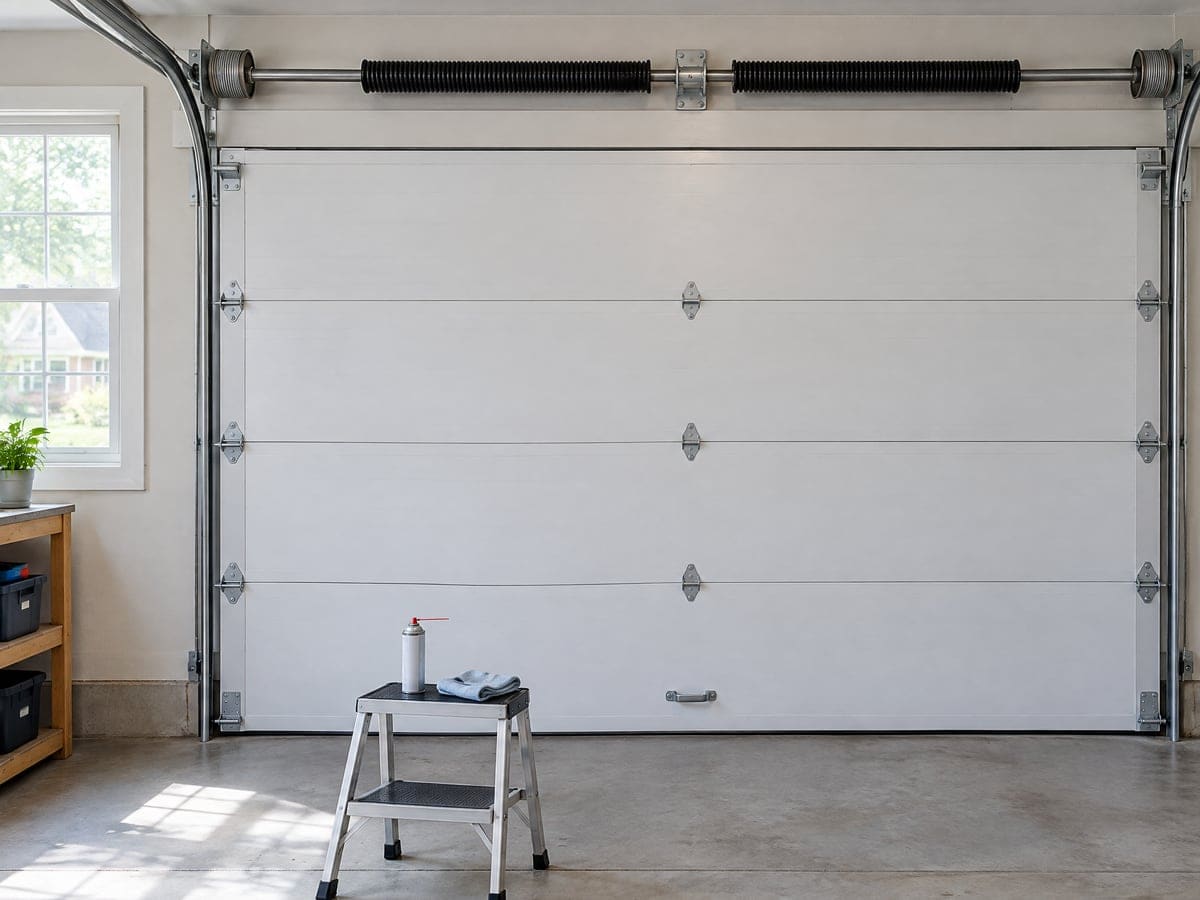
What is the door saying?
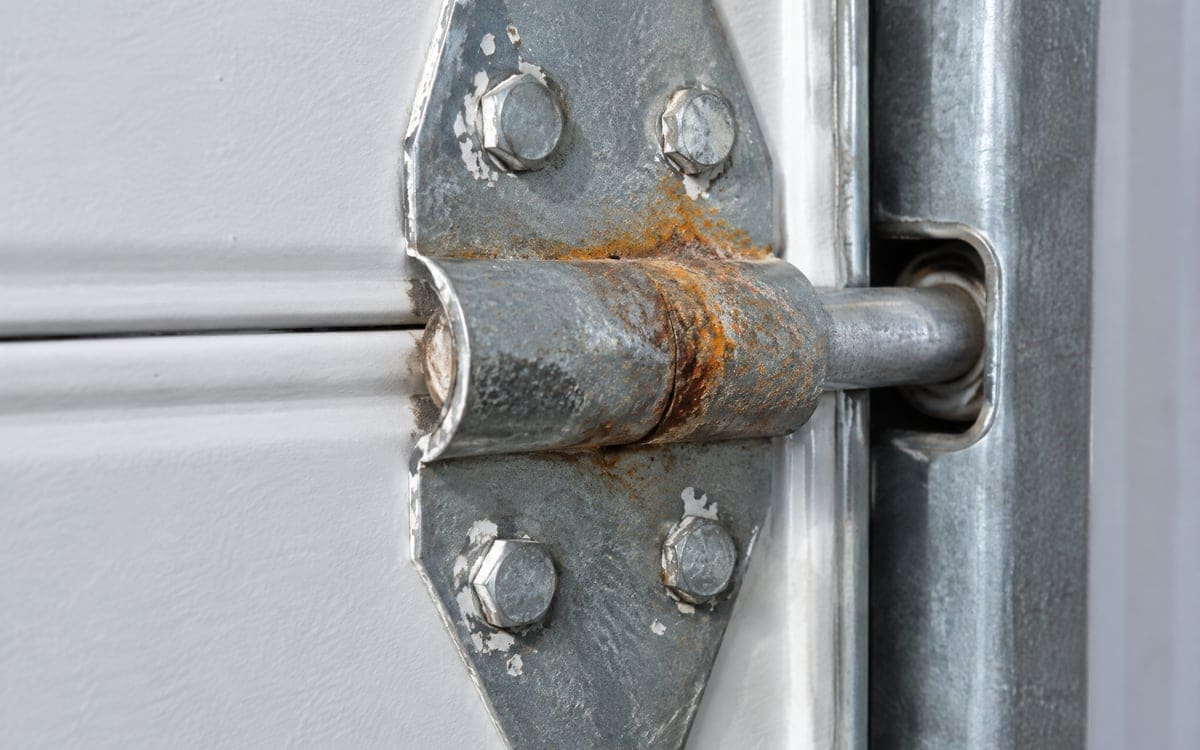
Each kind of noise comes from a different part of a garage door. The technician runs the door once, listens for where the sound starts and whether it stays in one spot, and works out from there.
1. One full run, listening
A single open and close with the opener running, standing well clear of the door's path. Where the noise starts, how it changes with position, whether it rides the whole run or shows up at one height, and whether the opener itself is adding to it all get noted before anything is touched.
2. Squeal
A sharp, high squeal is almost always a bearing. The center bearing on the spring shaft, the end bearings at the drums, or the sealed bearings inside the rollers are the usual culprits. A squeal that rides with the door, loudest at the drums, points to the end bearings. A squeal at one point on each run is often a single roller with a dying bearing. Grinding rollers often start as a squeal before they get rough.
3. Grinding
Grinding is metal on metal. A roller with a cracked wheel is turning on its stem, not rolling. A hinge that has worn through its sleeve lets the roller stem grind against the hinge plate. Grinding at the track usually means a roller is flat-spotted, bent or seized. Rollers and hinges are the fix, often as a set across the door.
4. Popping or banging
A single sharp bang from the garage with the door still closed is almost always a torsion spring letting go. The gap in the coil above the door is the tell. Do not run the door after that bang; the opener cannot lift what the spring was lifting, and forcing it damages more. A spring that pops is a technician job. A softer popping along the run, in time with the sections, is usually hinges that have lost their lubrication, or a cable settling as it works through a frozen bottom seal.
5. Rattling
A rattle moves with the door and comes from loose hardware: section bolts, a jamb bracket, a hinge screw backing out, a strut tapping the back of a section. We go along the door with a nut driver, snug what is loose, and replace fasteners that have worn their heads.
6. Humming from the opener
A hum at the opener head with the door not moving is almost always the door, not the opener. A broken torsion spring leaves the whole weight on the opener, which can only hum against it. A hum that comes with movement is normal; a hum that comes with no movement is a stopped door. A humming opener with a door that will not move usually points at the spring first.
7. Scraping along the track
A long, continuous scrape as the door opens is a roller rubbing on the inside of the track: a bent track, a loose jamb bracket or a bent roller stem. The fix sits at the track itself. Scraping at the track walks through what we check.
| Noise | Likely cause | What it usually needs |
|---|---|---|
| Squeal that rides the whole run | A dying end bearing or center bearing | New bearings, often with new springs if the shaft shows wear |
| Grinding at one height | A cracked or flat-spotted roller | New rollers across the door |
| A single sharp bang, door shut | A broken torsion spring | Stop using the door; spring replacement |
| Popping along the run | Dry hinges or a cable working through a stuck seal | Lubrication, bottom seal check |
| Rattle in time with the door | Loose fasteners, a loose strut | Tighten; replace worn fasteners |
| Hum at the opener, door still | A broken spring under load | Spring replacement first, then opener check |
| Long scrape as the door moves | Bent track, loose bracket, bent roller stem | Track work and new rollers |
Lubrication: what to oil and what to leave alone
A door that got noisy over time is often a door that never got oiled. On a visit we lubricate hinges, the sealed-bearing rollers, the spring coils and the opener's rail; we do not grease the inside of the tracks. The tracks are a running surface for the rollers, and grease in the track picks up dust and grit and makes a lapping compound that chews rollers.
For between visits, the safe rule: nothing above shoulder height, nothing at the bottom corners, no ladder or stool near loaded hardware. A spray from the floor is fine on the roller stems and the lower hinges, and a light spray along the spring coils from below without touching the spring. Heavier work belongs with a visit.
Quiet this door or start over
A noisy door is usually a parts fix, while a worn-out door needs replacing; the dividing line is how long the parts list runs.
When quieting the door works
- One kind of noise from one kind of part, caught early
- Rollers that have gone off together, as sets usually do
- Hinges that are loose or dry
- An opener sprocket or chain that has worn and can be replaced
- Bearings on a spring shaft that is otherwise sound
When the door is past quieting
- Noises from several parts at once, each needing its own fix
- A spring shaft worn through where the center bearing sits
- Sections cracked at the hinges from years of carrying the roller stems off angle
- An opener on its second gear kit, still humming on every run
How we tell at the door: we add up what a quiet-the-door quote would need and set it against the age and condition of the sections and the opener. If the parts list is longer than the door is worth, a tune-up to catch the next noise early is a better next visit than a parts marathon.
What our technicians bring on a noisy call
Our vans usually carry roller sets, section hinges, center and end bearings, a stocked kit of fasteners, replacement sprockets and chains for common openers, winding bars for spring work, and the right lubricants for hinges, rollers, springs and opener rails.