Hoffman Estates dented and cracked door sections

Replacing a dented garage door panel in Hoffman Estates

Backed into the door, or did a storm crack one section? A garage door panel replacement in Hoffman Estates can save the rest of the door, as long as the model is still made and the hinges, track and springs around that section are sound. We size up the whole door before pulling one section.

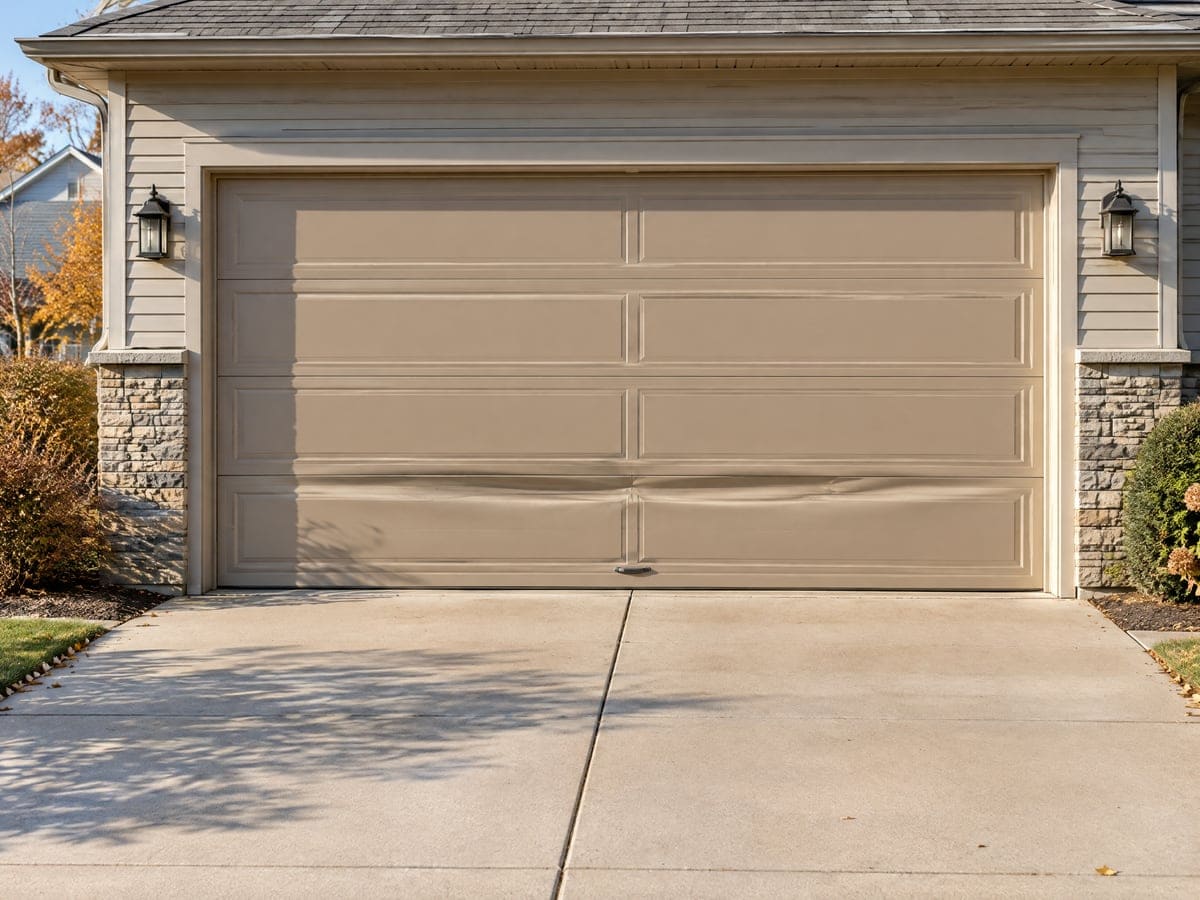
A dent creasing the lower sections of a tan two-car door, ready for garage door panel replacement.

Can one section be swapped?
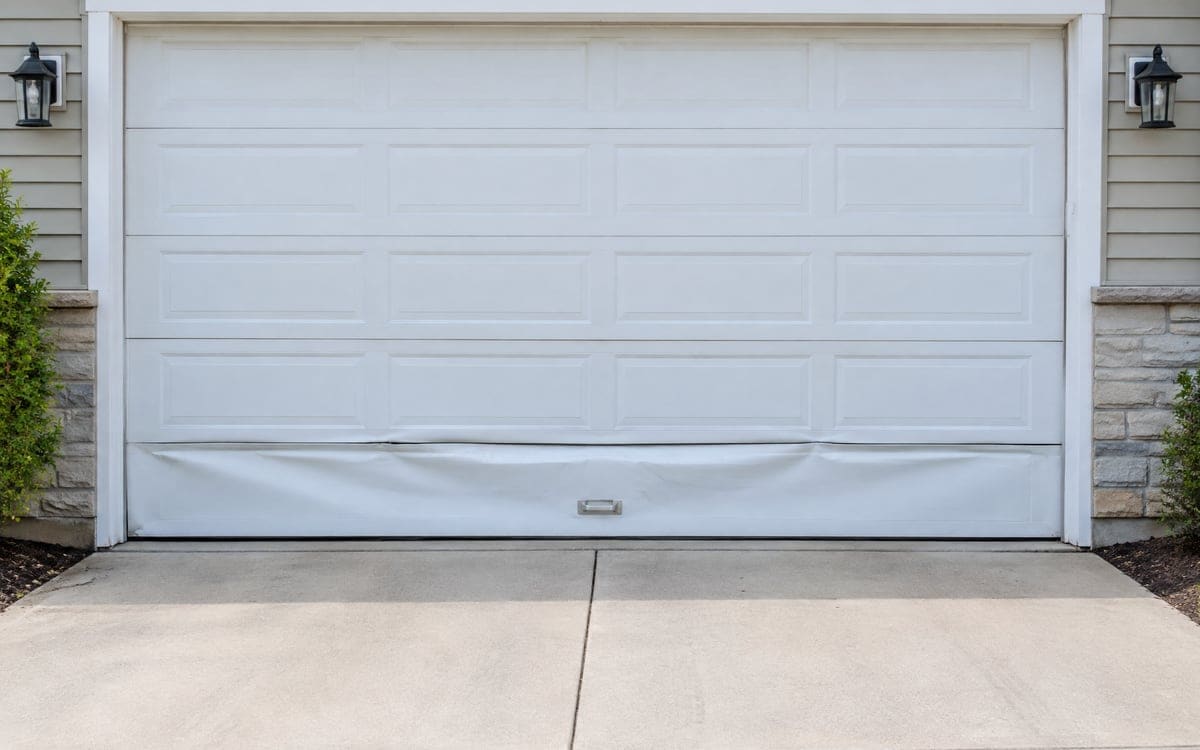
A crease across the bottom section of a white two-car door, seen from the driveway, ready for garage door panel replacement.

Our technician starts with the whole door, not the piece that got hit. A good panel swap turns on five things, and we go through them in this order.

1. Does the door still run straight?

We watch one open and one close with the opener running, standing clear of the door's path. A catch, a lean to one side, or a change in sound at the damaged section tells us the bump pushed something besides the panel. Track, rollers and hinges all get a closer look if the door no longer lifts true.

2. The hinges between the damaged section and the ones above and below

Hinges carry the sections together and the rollers that run in the track. A bump that bent a section usually bent at least one hinge. A hinge with a slight twist is easy to miss standing on the ground, so we check each one for cracked plate corners, elongated screw holes and roller stems that no longer sit square in their sockets.

3. The struts, end stiles and section edges

A section may look intact and still be cracked at the end stile, where the hinge bolts through. We press the stile with a hand, listen for creaking, and run a finger along the top and bottom edges for lifted paint or a split. A reinforcing strut across the back of a section can crack along its length even when the steel skin stays smooth.

4. The manufacturer label and model number

The label is usually inside the top section, printed on a sticker about the size of a business card. Model, series and section color code live there. Without those, matching a replacement section becomes a guessing game. On older doors, the sticker is often faded or missing; we take close photos of the section profile, the embossed pattern and the cross-section of the end stile to send to a parts supplier.

5. The track at the point of impact

A hit hard enough to crease a section almost always pushed against the roller behind it, and the roller then pushed the track. Dents, bows and loose jamb brackets at that height mean bent track that has to be straightened or replaced before a new section goes in. A new section bolted to a bowed track jams the first time the door runs.

Symptom Likely cause What it usually needs
Shallow dent, no crease A bump at low speed A cosmetic touch-up, or a new section if it bothers you
Creased section, bent hinge A harder car bump New section and new hinges, with the track checked for a bow
Cracked end stile A section flexed too far A new section, sometimes with a reinforcing strut added
Bent hinge, section looks fine A failed roller stem on impact A new hinge and a new roller
Rotted wood section at the bottom Years of ground moisture A new section if the model is still made, otherwise a replacement door
Hole through a steel skin A sharp impact A new section; a patch is cosmetic only
Section pushed back from the opening A hit while the door was moving A new section and a hard look at the whole door

Repair this door or replace it

A new section only makes sense on a door that is otherwise sound.

When a panel swap works

  • The model, series and color code are still available from the maker or a parts supplier
  • The other sections, hinges, rollers and track are sound
  • The springs are well within their working life
  • The bottom seal and the weather stripping around the opening are fine or close to it
  • One or two sections took the damage, not more

When a new door makes more sense

  • The model is discontinued, and nothing on the market lines up with the embossed pattern
  • Several sections are damaged or showing rot
  • The springs are failing and the opener is tired
  • A wood door has rotted at the bottom section and the one above
  • The replacement section price adds up to a sizeable share of a new door anyway

At the door, we hold a candidate replacement up against the existing door for pattern and color, and we check the sections above and below for play that a new section will not fix. If the only match a supplier can find is close but not exact, we show you both so the choice is yours.

What our technicians bring on a panel visit

A van heading out to a panel job usually carries common section hinges, roller sets with sealed-bearing wheels, replacement end stiles, struts, section bolts, winding bars for the spring work, and a camera for supplier photos. Blank replacement sections are ordered to the door, so most panel jobs are two trips: one to size up and photograph, one to fit.

The visit, four steps

  1. You call and tell us what hit the door, which section looks damaged, and whether the door still runs. We send a technician to look.
  2. The technician measures the opening, reads the label, photographs the damage and the section profile, and walks the door with you.
  3. You get a price for the replacement section, any hinges, rollers or track that need to go with it, and the fitting visit. The technician names the price and waits for your go-ahead.
  4. The section is ordered. On the fit visit, we release spring tension where the work needs it, swap the section and the hardware around it, and run the door while you watch.

Calls may be recorded. A short notice plays before the call connects.

Panel replacement on Hoffman Estates houses

The median home in Hoffman Estates was built in 1976, and the 1970s alone account for about a third of all housing in the village. On a swap-and-match job, the older the door, the harder it is to find a matching section. A door of recent vintage is often an easy match, and one from a decade or two back is often not.

When damage came from a car or a storm and a homeowner's insurance claim is in play, state law shapes the paperwork. Under the Illinois Home Repair and Remodeling Act, before starting work above a set amount, the contractor must give the customer a written contract or work order to sign that states the total cost, including parts and materials and any charge for an estimate, plus the business name and address. The same Act also bars a home repair contractor from advertising or promising to pay or rebate any part of an insurance deductible to win a sale. That ban applies to every home repair contractor in Illinois, us included.

Garage door panel replacement in Hoffman Estates: your questions

Can you replace just one garage door panel?

Yes, when the model is still available and the rest of the door is sound. A one-section swap means the new section, matching hinges, often a new roller or two, and a careful fit. The sections directly above and below the damaged one get the closest look, because hidden damage usually sits there.

What if my door model is no longer made?

Older doors run out of exact matches sooner than people expect. We can sometimes find a close-match section in the same profile and color, or a bare section that gets painted after fitting. If no match is close enough to look right from the street, a full replacement makes more sense than a mismatched patch. We show you side-by-side photos before you choose.

Will a new section match the old ones exactly?

A section ordered to the model, series and color code usually matches very well, though sun-faded sections next to a brand-new one may read as slightly different for the first season. Painted doors are easier to blend after the fact. We tell you what to expect before the section is ordered.

Is a dented panel safe to keep using?

A shallow dent on an otherwise sound section is cosmetic, and the door is fine to use. A crease that reaches the end stile, a bent hinge or any play along the damaged section is not cosmetic. Rollers can come out of the track, and a cracked stile can let go without much warning. If the door catches, leans or sounds different, stop using the opener and call.

Will you pay my insurance deductible?

No. State statute bars a home repair contractor from offering to pay or rebate the deductible to win a sale. We write our prices against the work, and the deductible stays between you and your insurer.

When is a new door the better call for a Hoffman Estates house?

When the door is already old and the damaged section was the latest in a string of problems, or when matching parts for the model have dried up. The fix or replace question covers it in more detail.

How does an insulated section change the job?

A section with a foam core and an inner steel skin is heavier than a single-skin section, and it has to be matched to the right spring size. Mixing a lighter old section with heavier new ones throws off the door's balance, and the opener will feel it. On an insulated door, we check the spring numbers before ordering the section. Matching insulated sections covers the detail.

For a dent that bent a hinge or pushed the track, keep the car out of that spot and leave the opener alone until a technician has looked. Call (847) 744-8615 and tell us the make of the door if the label is still readable, which section was hit, and whether it still opens. You can also leave your number in the form below and we will call you back. For checks on any Hoffman Estates garage door company you are weighing, see the contractor checklist.

Door stuck, loud or lopsided?

Describe the door, and you talk with someone who works on garage doors.

Call (847) 744-8615

Calls may be recorded. A short notice plays before the call connects.

Browse all services

Rather we call you?

Leave your name and number and we will call you back.

We use your number only to call you back. Privacy policy