Hoffman Estates garage door installers

Installing a new garage door in Hoffman Estates

A new garage door is a big piece of the front of a house, and in an attached garage it is a wall of the house too. On a garage door installation in Hoffman Estates, our installers pick the door with you around how the garage gets used first, and then around how it looks from the street.

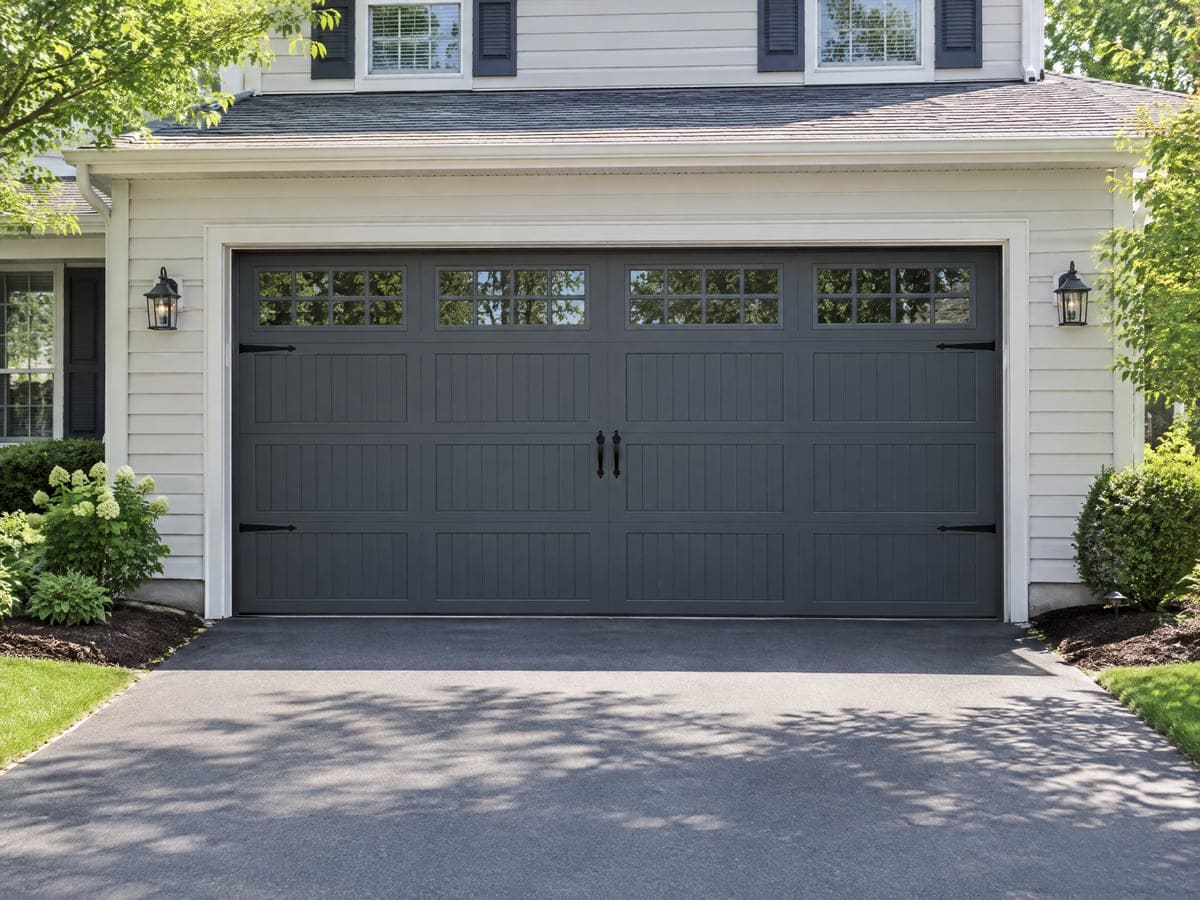
A finished garage door installation: a dark gray carriage-style two-car door with window panels on a white house.

Picking the door for your house
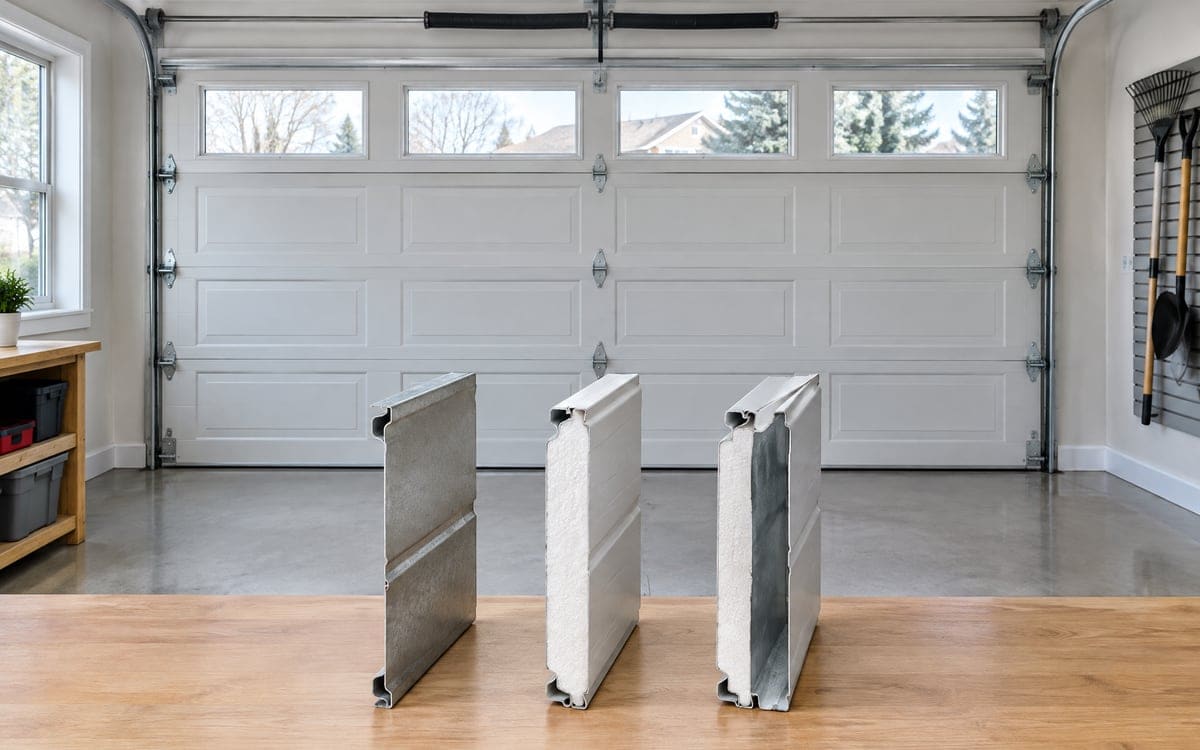
Three cut door sections on a workbench showing single steel skin, double skin and foam core, the choice made before garage door installation.

An insulated door on an attached garage pays its own way over the life of the door, because the garage pulls less heat out of the mudroom and the house. Our technician walks the choice with you against the opening, the room above the door, the floor and what the existing door told us.

Single-layer steel is a plain stamped skin on a frame: light, least costly, and lets heat through. Double-layer steel adds foam insulation inside and a vinyl backer. Triple-layer steel is skin, foam core and a second steel skin, which is the most insulated and the quietest. Composite doors are a frame with molded facings that look like wood planks without the maintenance. Wood doors are custom carpentry, heavier than steel, and need a finish schedule. Carriage house styles cover any of those builds: swing-look hinges, strap plates and often a row of top-section windows. The insulation core is the foam between the skins; thicker and denser cores keep more heat in and more noise out.

If you want Look at
A quiet door, especially under a bedroom Triple-layer steel with a foam core
A warmer attached garage in January Insulated double- or triple-layer steel, with a tight bottom seal
Low upkeep with a wood look A composite door
Windows for daylight in the garage A top-section window row, insulated glass on an attached garage
A look that matches the house Carriage house styling on a brick house, or a plain long-panel on a ranch

What installation day looks like

1. Measuring and checking the opening

The technician measures width, height, headroom above the open door, backroom from the door into the garage, and the side room on each jamb. We check the floor for level, the jambs for plumb, and the header for straight. A new door needs the opening close to square; we flag any out-of-true that will show after the door is up.

2. Releasing tension and removing the old door

The spring tension on the existing door is released first; this is the technician's work, with winding bars and the door in the right position. The sections come down one by one, the track unbolts from the jambs, and the old opener comes down if it is being replaced too. Taking out the old door is covered in detail there.

3. Tracks and the first section

New vertical tracks go up with the jamb brackets, plumb and spaced for the new rollers. The bottom section goes in first, with the bottom seal and the two bottom roller brackets. The bottom brackets stay under spring tension for the life of the door, which is one reason their work belongs with a technician.

4. Stacking sections and hinges

The next sections stack on top of the first, each one bolted to the one below with hinges that carry the rollers. We check level and square at each section, because an error at the bottom only grows as the door builds up.

5. Springs, cables and balance

The horizontal tracks and the spring shaft go in above the door. Springs are sized to the door's weight; the right spring makes the opener's job small. Cables run from the bottom bracket to the drums at the ends of the shaft. The technician winds the springs with winding bars, lifts the door to check balance, and adjusts if the door drifts from halfway.

6. Opener hookup, or a new opener

If your opener is coming along, we hook it to the new door, reset travel and force to the new weight, and run it. If you have asked for a new opener, the opener install folds in here. A heavier insulated door often earns a bigger opener head, and we flag that at the quote.

7. Reversal test and walk-through

A two-by-four under the door tests the reversal. The door should come down, touch the wood and reverse. We walk the door with you, show you the new seals and where the new weather stripping meets the jamb, and hand over the paperwork.

Repair this door or install a new one

When a new door earns its keep

  • The door is a flat uninsulated steel skin on an attached garage, and the heat loss shows
  • The door has been patched one section too many
  • The spring is on its third replacement, and parts for the model are running thin
  • You want a style the current door cannot give you

When keeping the current door makes sense

  • One section is damaged and the rest is sound: one-section work is often the right call
  • The door is fine and the opener is the problem
  • Only the bottom seal has gone and daylight is the issue

How do we tell at the door? We look at the sections, the tracks, the springs and the hinges together. The fix or replace question walks through the call in more detail.

What our installers bring on install day

A new-door visit usually carries the door sections, matching tracks, springs sized to the weight, cables, rollers, bottom brackets, bottom seal, side and top stop molding with weather strips, hinges, lag screws and the tools: winding bars, drill, level and the opener if that is being swapped too. On a non-standard opening, extras like shims and jamb trim come along.

On the call and the install visit

  1. You call and tell us the opening size if you have it, the garage (attached or detached), what the current door is doing, and what style you have in mind.
  2. The technician comes out, measures, listens to what you want, and shows you a short list of doors that fit the opening and the budget.
  3. You get the price for the door and the opener if any. The technician names the price and waits for your go-ahead; the door is ordered after that.
  4. On install day, the old door comes down, the new door goes up, and the balance and reversal checks run with you watching.

Calls may be recorded. A short notice plays before the call connects.

New doors across Hoffman Estates

About 12 percent of the village's housing was built in 2000 or later. On an older frame, we often need jamb trim or shims to seat a new door, and we flag that at the visit. January in the area averages a 25.2 degrees F mean temperature, cold enough that an insulated door on an attached garage shows up on the heating bill.

On permits, the property owner is ultimately responsible for making sure a permit is obtained, and garage doors are not on the amended list of residential work exempt from permits. For a given job, Development Services at 1900 Hassell Road answers whether a permit is needed; the permit question goes further into it.

The Illinois Home Repair and Remodeling Act lists garages among the work it covers, so an install is clearly inside the Act. The Act requires the contractor to hand customers the Home Repair: Know Your Consumer Rights pamphlet, and before starting work over a set amount, to give the customer a written contract or work order to sign that states the total cost and the business name and address.

Garage door installation in Hoffman Estates: your questions

What makes a garage door installation longer?

A straight swap on a standard opening and a sound frame is the short end. A new opener, a jamb repair, electrical changes, a non-standard opening or a composite or wood door that needs extra care all stretch the job. The technician walks through what applies at the visit.

Do I need a permit to install a new garage door in Hoffman Estates?

The property owner is responsible for the permit, and garage doors are not on the exempt list. For your specific job, Development Services at the Village is the one to ask.

What hours can installers work?

Is an insulated door worth it here?

On an attached garage, almost always. The garage wall between the garage and the mudroom is often thin, and an insulated door turns the garage into a buffer. Insulation on an attached garage walks through the reasoning. On a detached garage with no heat, an insulated door is a quieter and sturdier door more than a warmer one.

Will my opener work with a new door?

Often yes, if the opener has photo-eye sensors and the new door is not much heavier than the old one. A single-layer old door swapped for a triple-layer insulated door is a weight change, and we check that the opener's horsepower and travel suit the new door before we hook it up.

What happens to the old door?

We take it down in sections and carry it out as scrap, or leave the sections on the driveway if you want to keep a panel for the workshop or the back fence. Say so when the price is discussed so the right space is in the truck.

Which style suits which house?

Long-panel steel without the raised rectangles reads well on newer builds. Carriage house styling, often with a top row of frosted windows, suits brick houses. Composite doors with a wood look suit houses where a real wood door is wanted without the finish schedule. We show you three or four doors that suit the house at the visit, not a whole catalog.

What should the price include?

Everything that is going in: the door model and color, the opener if any, tracks, springs, rollers, hinges, bottom seal, weather stripping and labor. What moves the price of a new door covers how a quote is put together.

For a new-door quote, measure the opening if you can and have the make of the current door handy. Call (847) 744-8615 and tell us the opening size, the garage and the style you have in mind. You can also leave your number in the form below and we will call you back.

Door stuck, loud or lopsided?

Describe the door, and you talk with someone who works on garage doors.

Call (847) 744-8615

Calls may be recorded. A short notice plays before the call connects.

Browse all services

Rather we call you?

Leave your name and number and we will call you back.

We use your number only to call you back. Privacy policy