What a tune-up covers
A tune-up is a step-by-step walk through every part of the door and opener. We take notes as we go, we tell you what we found, and anything that needs replacing is priced before it is done.
1. A look at springs, cables and drums
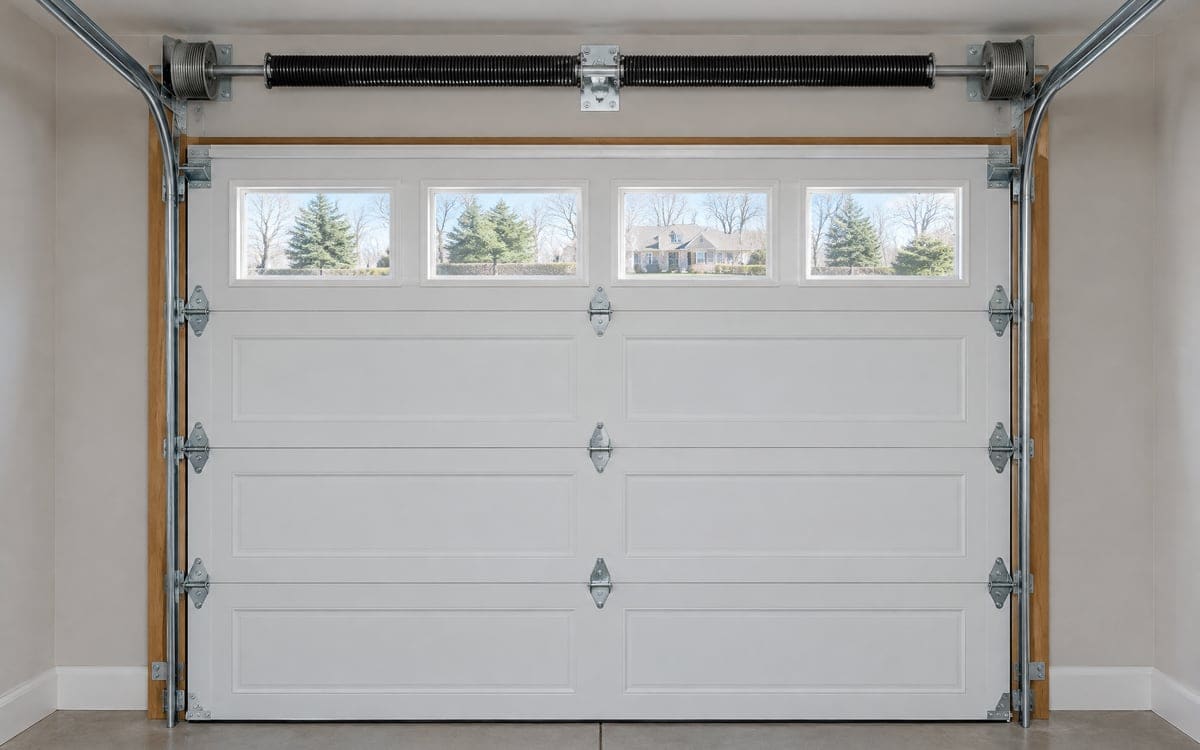
We start at the top. The spring, its cones and end bearings get checked for gaps in the coil, cracks and dry rust. The cables get walked from the bottom bracket up to the drum for frayed strands or kinks. The drums get checked for even wraps and set-screw bite. Nothing on this list is a homeowner job; the spring, the cables and the bottom brackets carry their highest tension with the door closed. Our spring repair page covers the one that comes up most.
2. The balance check
With the opener disconnected safely by the technician, the door should hold itself at waist height. A door that drops is spring-weak; a door that rises is spring-heavy. The balance check tells us whether the opener is working alone or against the door. The step involves disconnecting a loaded system, so it stays with the technician and is never a check for you to run from the floor.
3. Rollers and hinges
Rollers get spun by hand for flat spots, cracks and binding bearings. Hinge pins and plates get a visual for cracks and wear. A squealing hinge or a wobbling roller shows up on a slow test run. Where several rollers are tired, we price a full set, covered on our roller repair page.
4. Tracks and fasteners
We sight down the vertical tracks for dents and gaps, then along the horizontal tracks and the rear hangers for sag. Jamb brackets, lag screws and flag brackets each get checked by hand for bite. The track gets no grease; grease on a track collects dust and makes rollers skid.
5. Lubricating the right parts
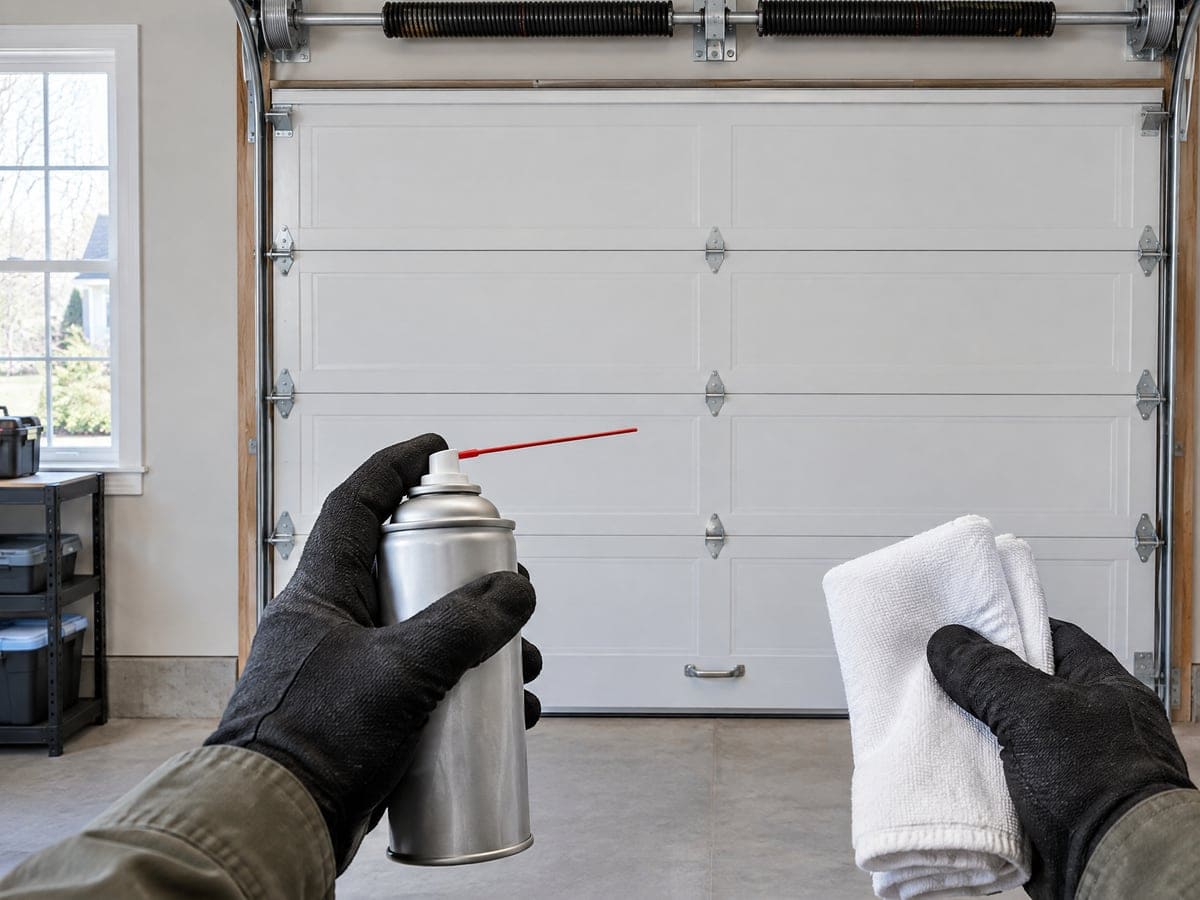
We oil hinge pins, roller stems with sealed bearings, the opener's chain or screw drive, and the spring itself with a thin coat. We leave the track dry, leave sealed bearings sealed, and leave the sensor lenses dry too. The right lubricant in the right places makes the door quieter for months.
6. Weather stripping and the bottom seal
We check the bottom seal for daylight at the corners and tears along its length, and the side and top stop molding for warping. Where a new seal is needed, it goes on the quote; the full job is on our bottom seal replacement page.
7. Opener travel and force
The opener's open and close limits get read against where the door actually seats. Close force gets tuned so the door closes firmly without reversing. On older openers we note missing settings and say so.
8. Sensor and reversal checks
Each photo eye gets its lenses wiped, its indicator light read and its bracket sighted. We finish with the reversal test, laying a two-by-four flat on the floor in the opening to confirm the door backs off when it meets resistance, and breaking the sensor beam to confirm it stops the close.
| What we look at | What a problem looks like | What it usually needs |
|---|---|---|
| Springs and cones | Gap in the coil, dry rust, bent cone | Replacement spring, often as a matched pair |
| Lift cables and drums | Frayed strands, slack, uneven wrap | New cables, drum repair |
| Rollers and hinges | Flat spot, cracked wheel, worn pin | New rollers, often a full set |
| Tracks and brackets | Dent, loose lag, wavy horizontal run | Realignment, new fasteners, sometimes a new section |
| Bottom seal and stops | Daylight, tears, warped stop molding | New seal, side weather strip or stop molding |
| Opener travel and force | Door seats hard or bounces back | Limit and force reset at the opener |
| Photo eyes and reversal | Dim or blinking light, missing reversal | Realignment, new sensors, sometimes a newer opener |
For noises that keep coming back after a tune-up, our noisy garage door repair page covers each sound and the part it usually points to.
Repair or replace
When a tune-up is the right call
A door that still runs, a spring you cannot remember replacing, an opener that works, and a season that is about to turn: that is tune-up weather. Catching one worn part now usually costs less than a chain of failures that pile up over the winter.
When the tune-up turns into a repair
Sometimes the inspection finds a part that needs replacing now, not later. A broken strand in a cable, a rusted bottom bracket, a photo eye that no longer tests, a flat spot on a roller: each gets quoted at the door, and we do the work on the same visit if the parts are on the van and the price is approved. On a door that is past saving, a tune-up is the wrong spend; we will say so and point to the services menu for the right page.
What a technician brings
Most tune-up visits go out with lubricant for hinges and springs, a selection of nylon rollers, hinge screws and bolts, bottom-seal rubber in common sizes, spare photo-eye brackets, torpedo and framing levels, a torque wrench, feeler gauges for the opener settings, and a two-by-four for the reversal test. If the inspection turns up a part not on the van, we quote and schedule it; most tune-ups finish in one trip.