How do we know a spring broke?
The signs below are the ones we work through at the house. They are also what to tell us on the phone, so the right spring sizes come off the van the first time.
1. The bang the household heard
A broken torsion spring sounds like a gunshot or a dropped two-by-four, and comes from above the closed door. People hear it from inside and come out looking for a fallen shelf. A spring that broke overnight is usually confirmed by the opener trying and failing in the morning.
2. The gap in the coil above the closed door
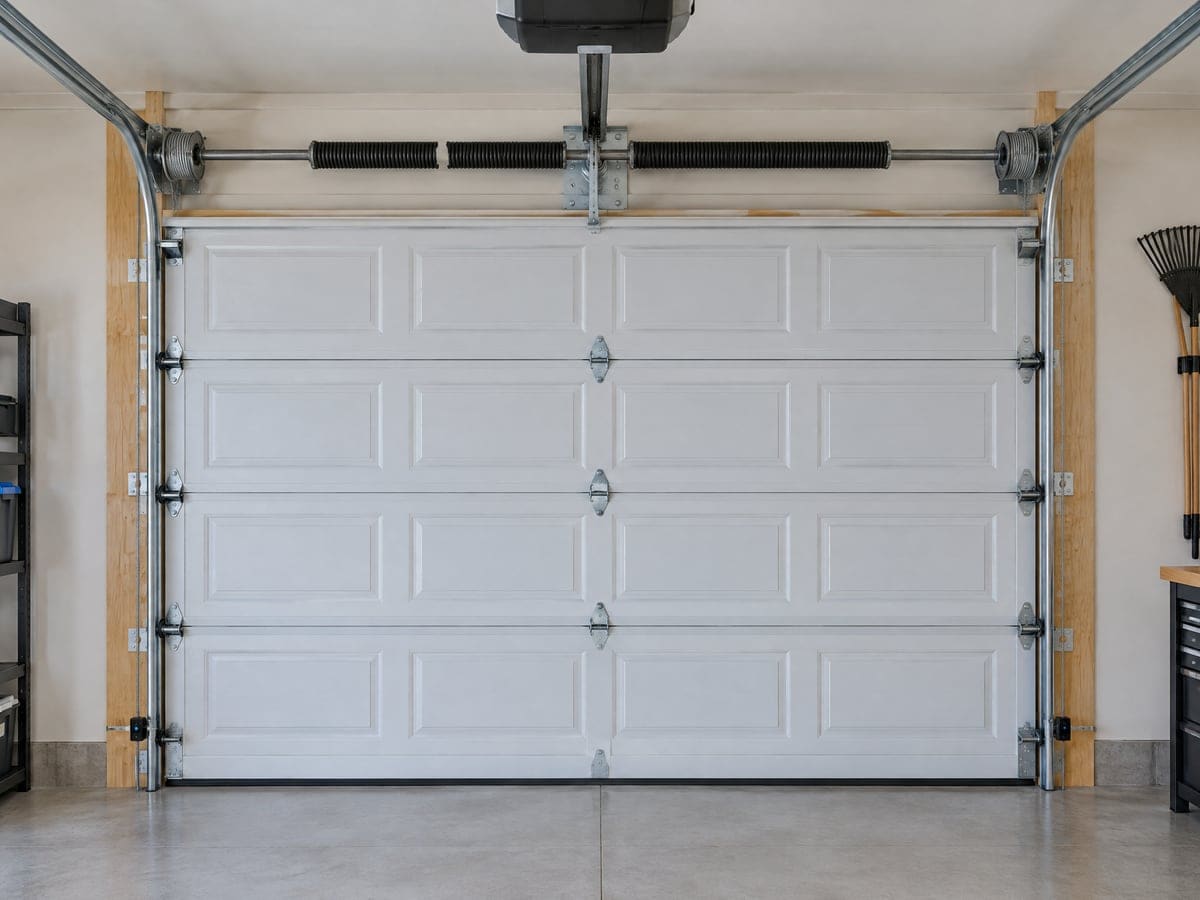
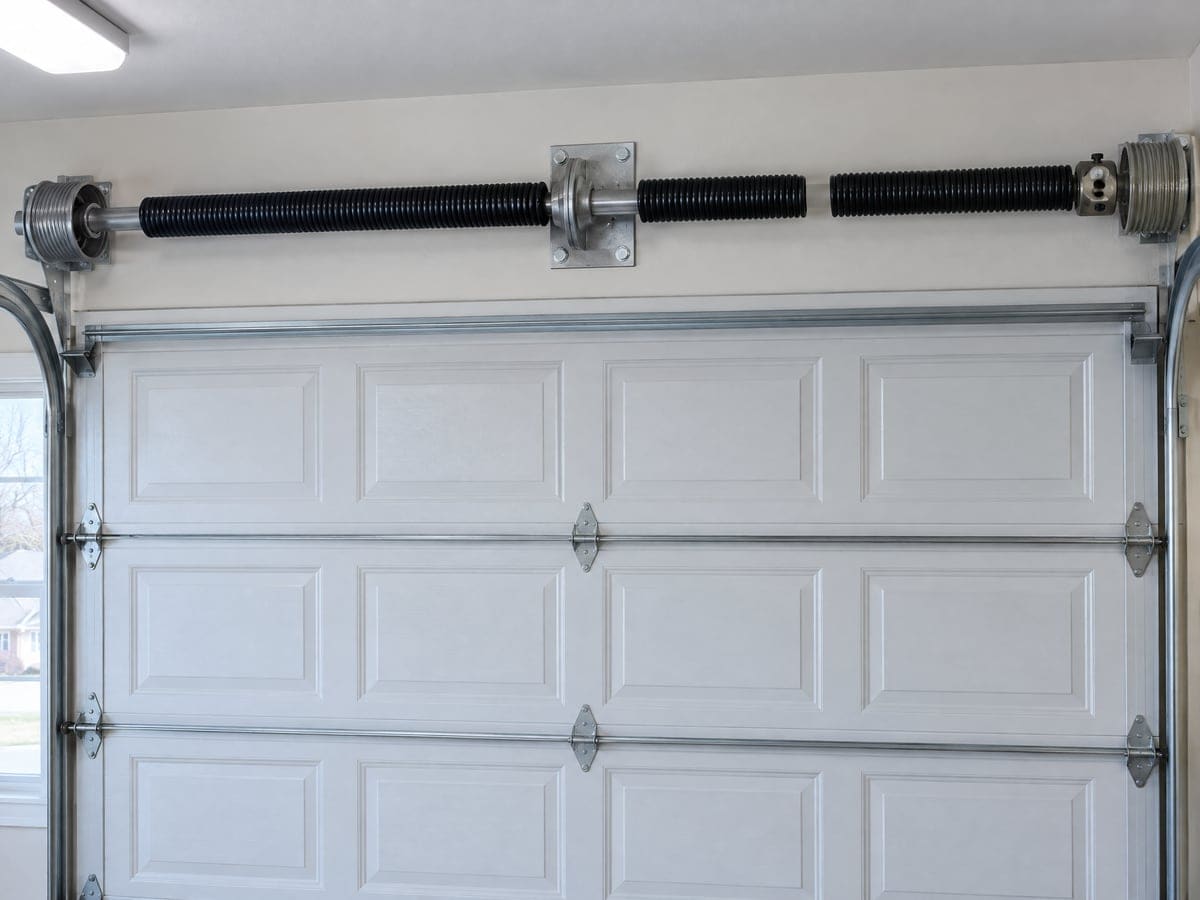
A torsion spring sits on the shaft across the header, wound tight when the door is closed. A broken spring has a clean gap where the two halves have separated, often a hand's width or more. From the floor, with the door down, that gap is visible to anyone standing in the garage. Do not pull the release cord to look closer, and do not run the opener.
3. An opener that strains or lifts a few inches and stops
An opener is sized to lift a door that the spring is holding up, not a bare door. With the spring gone, the opener will often hum or run for a second, lift the door a few inches, and quit. On older openers it may trip the overload. A motor that runs with no door movement at all almost always means a spring, not an opener.
4. Slack cables or a cable off its drum
When a torsion spring lets go, the cables lose the tension that held them against the drums and can slip off. When an extension spring lets go, the safety cables threaded through the spring hold the pieces, but the lift cables along the horizontal tracks go slack. Either way, a slack cable with the door closed is not something to run the opener against.
5. Torsion or extension, single or paired
A torsion setup sits on a shaft across the header. An extension setup runs along the horizontal tracks beside the door. A double door usually has a pair of springs sized together; a single door can have either one. The technician reads the setup, measures the inside diameter, wire gauge and length of the broken spring, weighs the door, and sizes the replacement to the right cycle count for the house.
A short vocabulary
- Torsion spring: wound against the door's weight on a shaft above the opening.
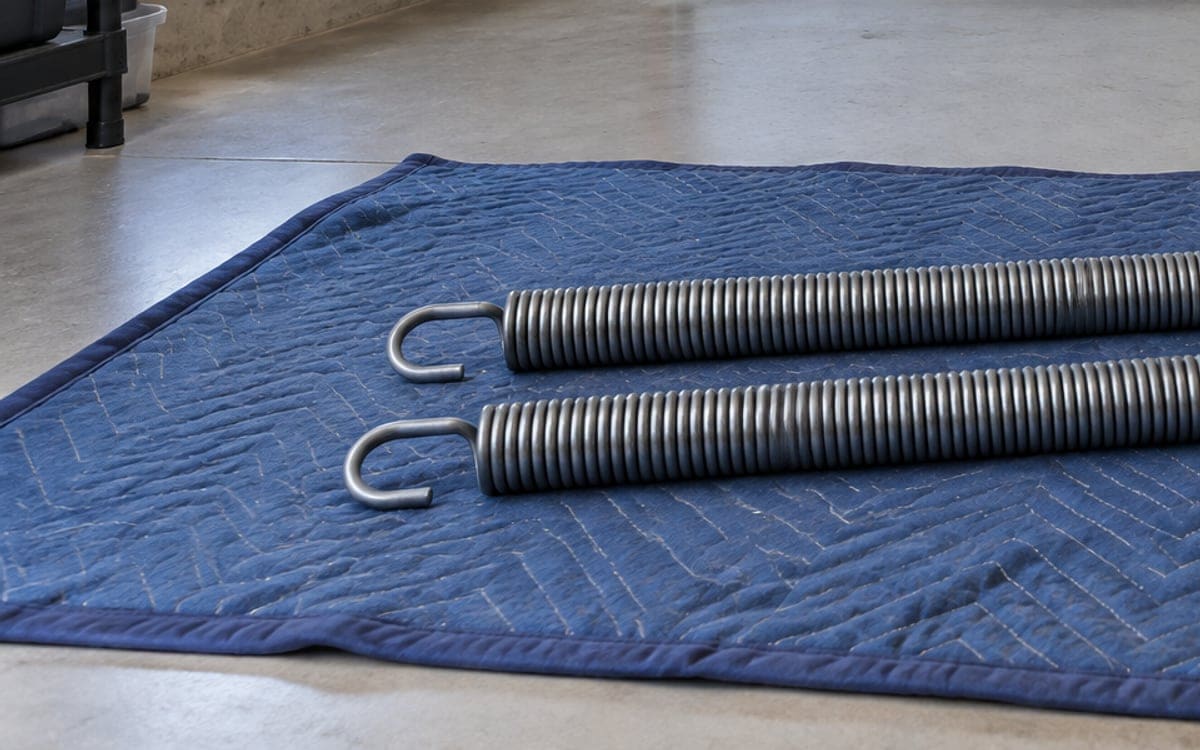
- Extension spring: stretched against the door's weight along the horizontal tracks.
- Cycle rating: how many open-and-close cycles a spring is designed for over its working life.
- Safety cable: a cable threaded through an extension spring so a broken spring cannot fly across the garage.
- Conversion: moving a door from extension to torsion when the overhead space allows it.
The symptom table
| Symptom | Likely cause | What it usually needs |
|---|---|---|
| Visible gap in the coil above the closed door | Broken torsion spring | Spring replacement, both springs on a pair |
| Door lifts a few inches with the opener and stops | Broken spring; opener trying to lift a bare door | Spring replacement before any opener work |
| Door lifts crooked, one side higher than the other | Broken spring on one side, or a cable off its drum | Spring and the cables that ride on the drums checked together |
| Slack lift cable with the door closed | Spring has let go; drum has unwound | Spring replacement, cables rechecked |
| Extension spring looks stretched out of shape | Fatigued extension spring | Extension pair replacement, or conversion to torsion |
Repair or replace
A broken spring is at the end of its working life, so the fix is a new spring. On a pair, both springs are replaced at the same visit, because the second spring was built to live the same number of cycles as the first and is usually not far behind. On a single setup, we fit one.
A new door comes up only when the spring failure points to a door at the end of its own life: sections cracked at the end stiles, hinges split, or a model so old that matching replacement springs are no longer stocked. In every other case, a spring is a repair.
An extension to torsion conversion is worth looking at when the garage has the overhead space for a shaft and the door is heavy enough that extension springs have been losing their life faster than you expect. When a broken spring pulls the door crooked often also means the door needs a once-over before the new springs go on.
What a technician brings
A spring van usually carries torsion springs in common wind directions and inch counts, extension springs in a short range of lengths, winding bars sized for common cones, lift cables cut to common heights, bottom brackets, drums, safety cables, center and end bearings, and a cordless impact for the set screws. A door with an unusual spring (very heavy, very tall, or a split-cone setup) may need a return visit with the right part ordered in.