What is the cable telling you?
The checks below are the technician's, run at the house with the door closed and the opener unplugged. They are also what we ask you to describe on the phone, so the right cables and drums are on the van.
1. The bottom corners with the door closed
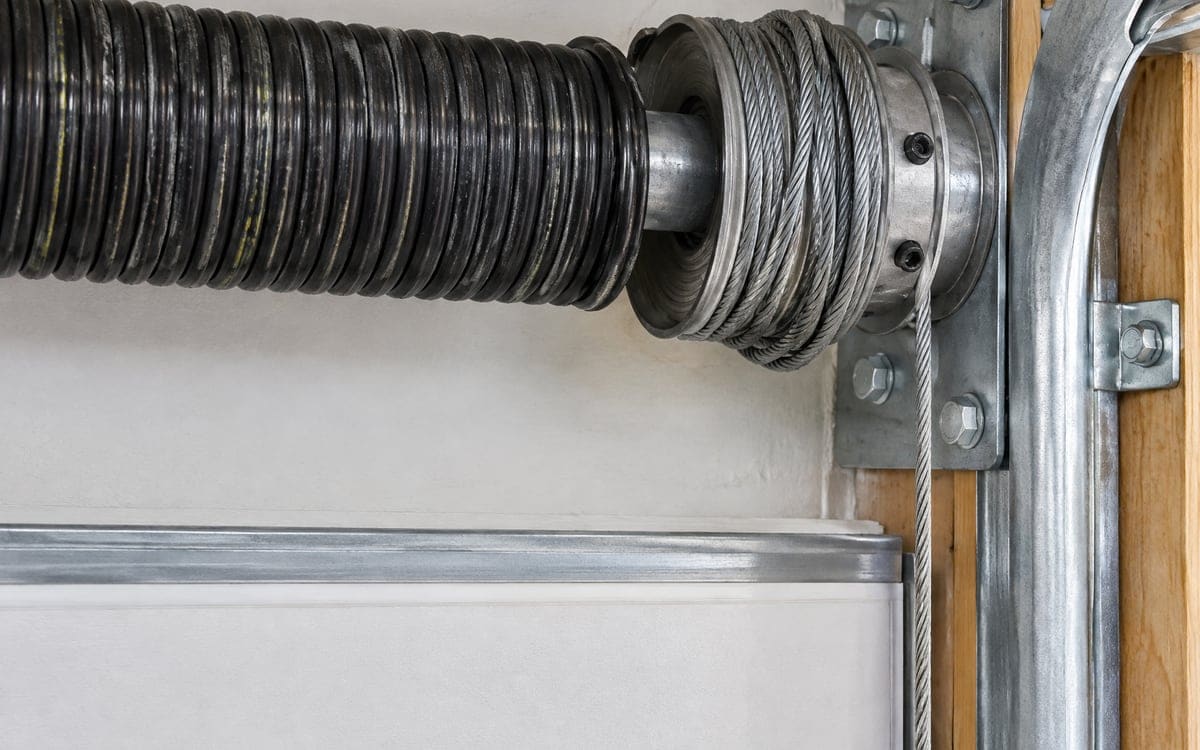
A lift cable attaches to the bottom bracket at each corner of the door and runs up the vertical track to the drum at the end of the spring shaft. With the door down, both cables should be straight, tight, and clean. A visible kink, a sag, or a loop of slack at the bottom corner is the first thing the technician looks for.
2. Fraying, rust and kinks
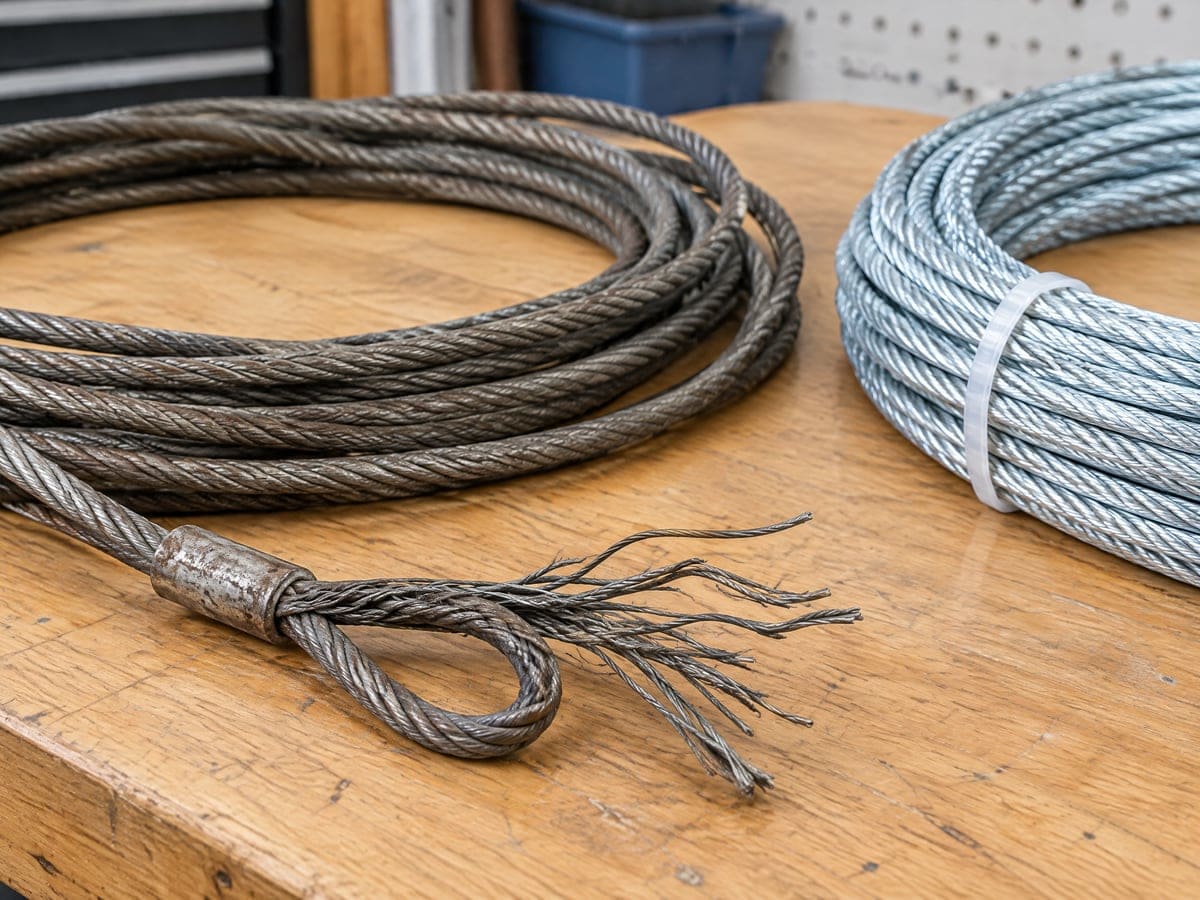
Lift cables fail from the bottom up. Road salt and apron slush collect at the floor, and the strand that lives nearest the concrete is the one that corrodes first. We check the lower foot of each cable for broken strands, rust at the eyelet of the bottom bracket, and kinks that mark where the cable has been pinched between a roller and the track.
3. A slack cable or one off the drum
A cable goes slack for one of two reasons: the spring that was lifting the drum has let go, or the cable has unwound off the drum. A loop of cable hanging from the drum is a sign that the door went down crooked, that a roller came out of its track, or that someone pulled the release cord while the door was up. The spring that works with the cables covers the spring side of this chain.
4. A door that lifts one side first
A door that comes up with one corner leading the other is almost always a cable problem on the trailing side. The cable has either come off its drum, stretched, or lost a wrap. The door is also probably on its way to a door pulled out of its track, so we check the rollers in both vertical tracks at the same visit.
5. The bottom bracket, which holds full spring tension
The bottom bracket at each corner of the door anchors the lift cable to the door and holds the spring's full tension through the cable. Changing a bottom bracket is a technician's job, with the spring tension managed first. We flag a cracked or heavily rusted bottom bracket for replacement during a cable visit, because a weak bracket is where the cable will tear through next.
The symptom table
| Symptom | Likely cause | What it usually needs |
|---|---|---|
| Frayed strands at the lower foot of the cable | Rust at the bottom bracket from apron slush | Both cables replaced; bottom bracket checked |
| Loop of slack hanging at the bottom corner | Cable came off the drum, or the spring let go | Cable rewound or replaced; spring checked |
| Cable off the drum with the door closed | Door went down crooked, or a bump in the track | Cable rewound and seated, track inspected |
| One side rises first | Cable stretched or has lost a wrap on one drum | Cable pair replaced, drums checked |
| Rusted, flaking bottom bracket | Years of road salt at the apron | New bottom bracket, both cables, slush protection at the bottom seal |
Repair or replace
Lift cables are replaced in pairs, like springs. The two cables were cut from the same length and have lived the same winters. A new cable on one side winding against a tired cable on the other side pulls the door out of true in a visit or two.
The parts beyond the cable are a judgment call. A drum that has worn a smooth groove into the wrap area, a bottom bracket that has rusted through, or a spring that is close to the end of its working life all come up during a cable visit. The quote separates the "needed now" and "worth doing while we are here" items so you can see each.
What a technician brings
A cable visit usually needs lift cables cut to the common door heights, bottom brackets in the common hole patterns, drums for both the common and the taller doors, safety cables, and a small set of hinge sets and bottom seals that often come off the same van. A door with an unusual height or a non-standard drum may need a return visit with the right part ordered in. Not every size for every door lives on the van.