Steel doors use a retainer that holds the seal
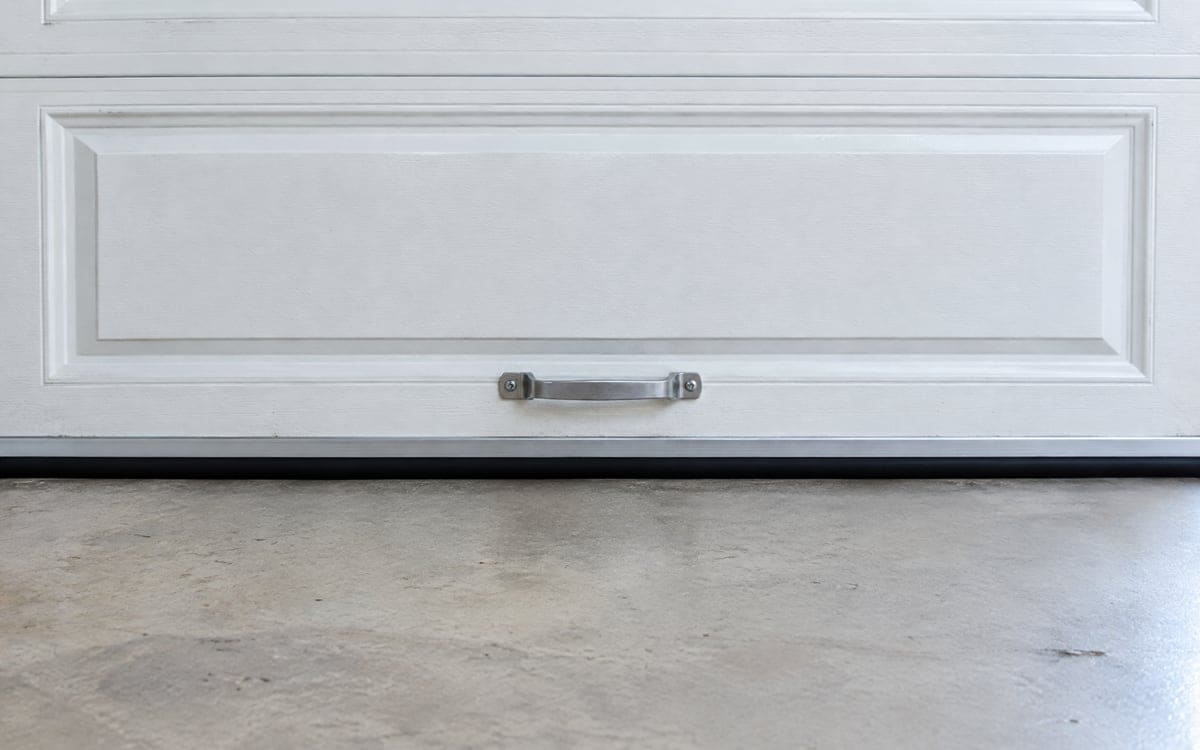
The bottom edge of a steel sectional door almost always carries an aluminum extrusion with two parallel channels running the full width of the door. A rubber seal with two shaped edges along its top slides into those channels from one side and runs end to end. When the door closes, the rubber body below the retainer squashes against the slab and makes the seal.
The retainer is a structural piece of the door, not a wear part in the usual sense. It is screwed, riveted or crimped into the lower section. When a bottom seal is replaced on a sound retainer, the old strip comes out and a new strip of the same profile goes in; the retainer stays.
Wood doors take a nailed-on seal
An older wood sectional door, and most carriage-style wood doors, do not have a retainer. The bottom edge of the door is a solid piece of lumber, and a strip of rubber seal is nailed or stapled to the bottom and the front face. The seal profile is flatter and the attachment is less forgiving than a slide-in retainer.
Replacing a nailed-on seal is more involved than swapping a strip in a retainer. The old staples or nails come out, the wood underneath is checked for rot or softening, and the new strip is attached with the right nail length so it bites into sound wood. If the bottom of the door is rotted, replacing the seal is the smaller part of the job and the bottom section needs attention before a new seal goes on. A rotted or damaged lower section is a different visit.
Bulb, T and J shapes are not interchangeable
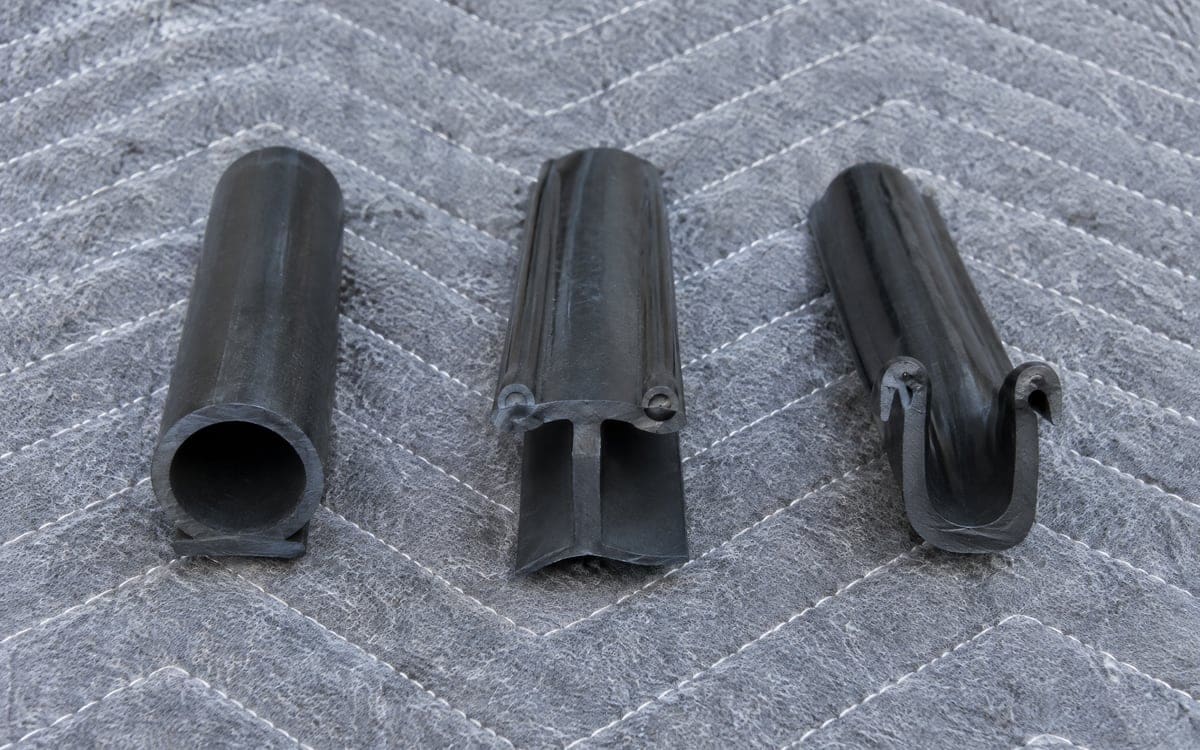
The three common seal profiles are the bulb, the T and the J. Each one is defined by the shape of its two top edges, which have to match the channels in the retainer. The body hanging below is what meets the slab.
A beaded bulb seal has two round, beaded edges along its top. Those edges slide into two parallel grooves in a standard aluminum retainer. The round body hangs below the door, and when the door closes, that body squashes against the slab. The round profile keeps contact where a slab has rolled or dipped at a corner, which is why bulb seals are common on modern residential steel doors.
A T-style seal has two T-shaped edges along its top that slide into a matching double T-channel in the retainer. The body below is often a flat or lightly shaped curtain. A T-style seal is the match for doors already fitted with a T-channel retainer. It gives a flat line against the slab and seals well on a level floor, but it is less forgiving of a slab that has moved.
A J seal has two J-shaped hooks along its top that catch into a J-channel retainer. The body below is a flat or looped curtain that lays against the slab, and that curtain can double over on itself so the slab contact is a two-line press rather than a single line. J seals pair with doors that have a factory J-channel retainer.
A worn retainer means more than a new strip
A retainer that has been bent, pulled away at a corner, or corroded through from salt is a different repair than a seal swap. A new strip rolled into a retainer that is bent out of true will not sit flat; a strip in a channel that has eaten away at one end pulls free the first time the door takes a hard close.
The signs that the retainer is the problem are usually visible from the floor: a corner of the retainer lifted away from the bottom section, a missing screw or rivet head, a pucker in the aluminum where something hit it, or rust spreading forward from the back. When one of those shows up, a new strip of seal alone is not the end of the job.
A replacement retainer on a steel door is a full-width piece, measured, drilled and fitted straight. The retainer is the thing that holds the geometry of the seal; a new strip of any profile cannot work on a channel that is not straight.
How to tell the type you have from the floor
Two visual checks tell you most of what you need, both with the door closed. First, look at the bottom edge of the door from inside. If you see an aluminum channel running the width of the door with a line of rubber poking out below it, the door has a retainer and takes a slide-in profile. If you see nailheads along the bottom edge and a rubber strip stapled or nailed directly to a wood edge, the door takes a nailed-on seal.
Second, step outside and look at the bottom corners from the driveway. Light at a corner means the seal is torn or the retainer is lifting; a flat press with no light means the seal and retainer are working. The exact profile of the retainer is read on the visit, when the technician can see the channel safely at an open end.
| Seal profile | Top edge shape | Matching retainer |
|---|---|---|
| Beaded bulb | Two beaded edges | Standard two-channel aluminum retainer, parallel grooves |
| T-style | Two T-shaped edges | T-channel aluminum retainer |
| J-style | Two J-shaped hooks | J-channel retainer |
| Nailed strip | Flat top edge, nailed or stapled on | No retainer; attached to a wood edge |
Choosing a profile for a Hoffman Estates winter
A seal that works through a Hoffman Estates winter has two jobs the rest of the year does not test. It has to close a gap when the slab is cold and slightly contracted, and it has to shed salted slush without hardening or tearing at the edges. Bulb seals handle both well because the round profile squashes evenly and the rubber keeps enough give at low temperatures. T-style and J-style seals pay off on doors already fitted with a matching retainer, where swapping to a bulb would mean a new retainer anyway.
A rodent-resistant insert is a cold-season add on any of the three. It does not change which type fits; it changes how the seal reacts to a mouse that has already found the door.
What a replacement visit looks like
A seal replacement on a steel door starts with a measurement across the retainer and an inspection of the channel for damage. The new strip replaces the worn one and the door is closed to check that the bulb presses flat along its full length, with no light showing from inside.
If the retainer is bent or corroded through at an end, a new retainer gets measured, drilled and fitted straight before the new strip goes in. A bowed or rotted lower section is a panel job, and a tune-up covers the rollers, hinges, cables and springs.
The perimeter above the floor is the other half of the weather barrier, and the side and top weather stripping is worth checking too. Worn bottom rollers are also worth a look when the seal is replaced, so roller inspection is a related service.