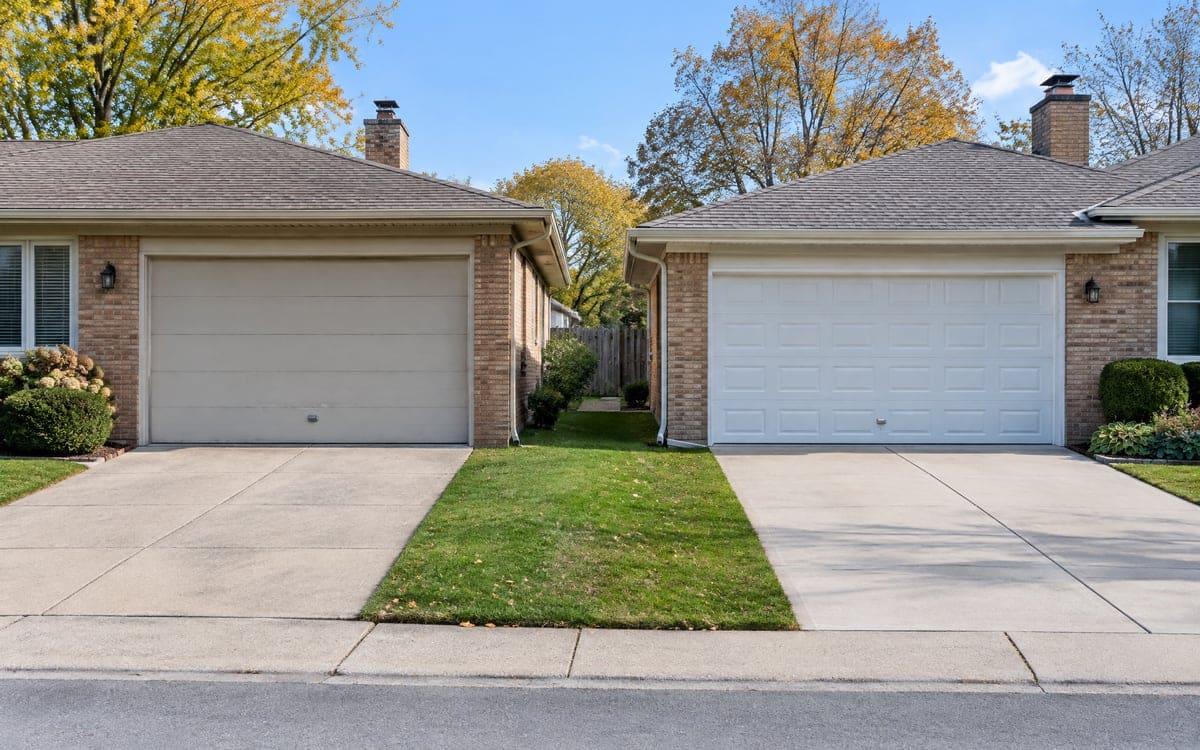
The 1970s built more of the village than any decade before or since
The single biggest batch of homes in Hoffman Estates came out of the ground in the 1970s. 6,293 of the village's 19,335 housing units, about 33 percent, were built in the 1970s, the largest share of any decade.1 A third of the housing from one decade means a lot of garage doors that went in during the same years.
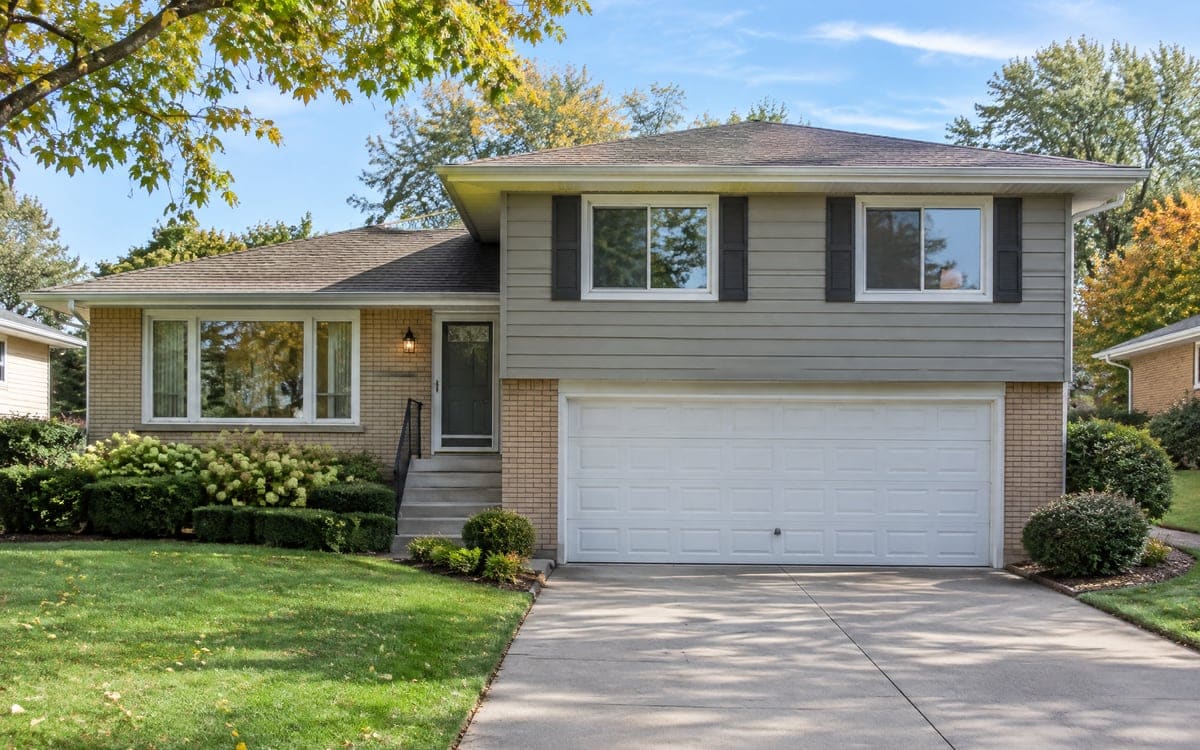
Half the housing dates from two decades
Stretch the window by ten years and the share nearly doubles. Housing built in the 1960s (3,846 units) and 1970s (6,293 units) together makes up 10,139 of 19,335 units, about 52 percent of the village's housing.1 More than one home in two was framed before 1980. About 63 percent of Hoffman Estates housing units (12,264 of 19,335) were built before 1980.1 The median year built for housing in Hoffman Estates village is 1976,2 with a margin of a year either way.
Parcel A came first, in 1955
The first part of what is now the village was a subdivision on a 160-acre farm. In 1954 Sam and Jack Hoffman of the Father and Son Construction Company bought a 160-acre farm for a subdivision, and the first homeowners moved in late in 1955.3 Those first streets, which the Village history calls Parcel A, carry the oldest garages in Hoffman Estates.
Residents voted to incorporate as the Village of Hoffman Estates on September 19, 1959.3 What came after that date is village history; what came before was a farm and a subdivision.
Winston Knolls and Westbury joined in the 1960s
The 1960s brought annexations north of the tollway. Village history calls the first 1950s subdivision Parcel A, and says annexations north of the tollway from 1961 included the areas that are now Winston Knolls and Westbury.3
The village grew rapidly in the 1960s and 1970s with both single-family homes and multi-family developments, with population nearly tripling to 22,000 in 1970 and reaching 37,000 in 1980.3 A population that nearly tripled by 1970 and kept climbing means a lot of garage doors, openers and springs went in at once. The original hardware is now fifty-plus years old on the earliest houses and forty-plus years old on the newest houses from that boom.
A house that age is on its second or third door, or still its first
The range is wide. One house may still have its original wood door; another may be on its third door and third opener. The hardware is the reliable way to tell where a given door sits in that range, which is why a fresh look across the whole system is often more useful than another one-part repair.
Springs and openers rarely last as long as the house
A door section, especially a steel one, can run for decades. The parts behind it that take the load, the springs and the opener, have a shorter working life than the door they move. Replacing tired springs at the first sign of a gap in the coil beats a mid-week morning with a car trapped behind a door that will not lift.
Openers age in two ways at once. The gears, the trolley and the circuit board wear out over time, and newer openers come with safety features that an older unit was never designed to have, such as photo-eye sensors near the floor and a rolling-code remote. A newer opener with sensors is the service page for a pre-sensor unit.
Older openers often did not come with the photo-eye sensors near the floor. If yours has them because an installer added a newer opener head along the way, sensors on an older opener are worth checking during a service visit. A sensor that fails on an older unit is sometimes a reason to look at the whole opener, since the sensor and the opener's logic board work as one system.
Attached garages and the door into the house
More than half the village's homes are single-family detached houses. 11,626 of the village's 19,335 housing units, about 60 percent, are single-family detached homes, and another 2,833, about 15 percent, are single-family attached homes.4 On an attached garage, there is a door between the garage and the house with its own Village rule.
The handout for attached garages is clear. For attached garages, the Village handout says the door between the garage and the house must be solid wood or solid or honeycomb core steel at least 1 3/8 inches thick, or 20-minute fire-rated, and must self-close by a door closer or spring-loaded hinges.5 A house door that no longer closes on its own is worth having a closer or hinges put back in order.
More on that door and the shared wall it sits in: insulating an attached garage covers how the two doors work together.
Townhomes share walls and sometimes rules
Fifteen percent of the village is attached single-family housing, mostly townhomes. In an attached development, the garage door is often part of the exterior that the association has an opinion about. Style, color and even the window pattern can be set by the rules. Before a replacement is scoped, the association or management agent is a quick call to make, because the door choice narrows fast once a style guide is in play.
The door still belongs to the owner, and the responsibility for permits still belongs to the owner. The association sits on top of that as an extra layer of approvals.
Newer homes are a small share
Not every house in the village is from the boom years. About 12 percent of the village's housing units (2,258) were built in 2000 or later, including an estimated 19 built in 2020 or later.1
The failures on those houses are earlier in the life cycle: bottom seals that have taken a run of Illinois winters, rollers whose bearings have grit in them, and remotes that lost their mates. Springs are usually fine on the first door, and sensors usually work on the first opener, until they do not.
What to look at first on a door that came with the house
The quickest signal of door age is the hardware above and beside the door. Short jamb-mounted springs that run along the horizontal tracks are extension springs, more common on older installs. A long single spring over the door on a shaft is a torsion setup, the newer standard. A door with no safety cables threaded through its extension springs is a safety upgrade waiting to happen. An opener head with a pull-string disconnect but no little lights on sensors near the floor is a pre-sensor unit.
For a house bought in the last few years, the first step is usually a look across the whole system rather than a single repair. From that, a single tired section can get swapped where sections are stocked, and replacing an original door comes up where sections are gone or the whole system is past its service life. The decision frame for either direction is in keep it or replace it.
For a wider look at how the village's housing and roads shape the services we see, the village's homes and roads has the rest.