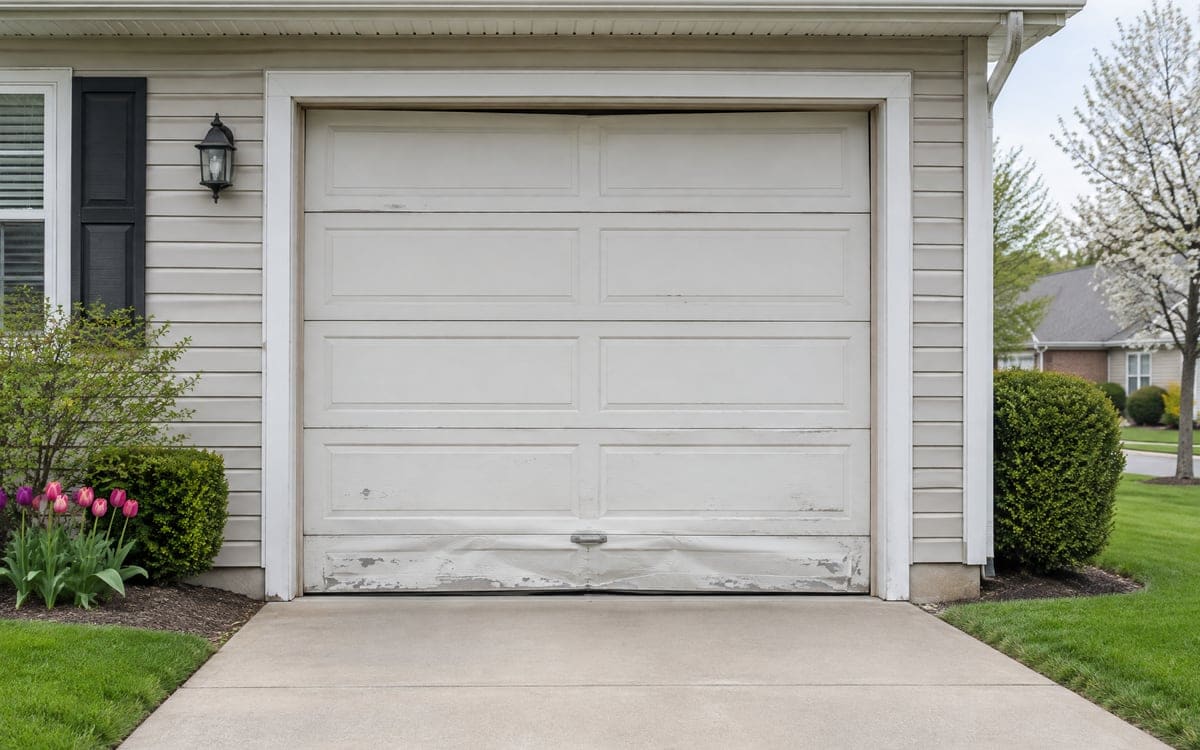
Count the failures first
A garage door's age matters less than people think. The median year built for housing in Hoffman Estates village is 1976, which puts a lot of homes well past their fourth decade. The useful question is how many separate things are wrong with the door right now.
A door whose only problem is a snapped spring, with sound sections and a working opener, is a one-part repair. A door whose spring just broke, whose sections are also dented from a car bump, whose opener struggled before the spring went, and whose bottom seal has been torn for two winters, is a different kind of job.
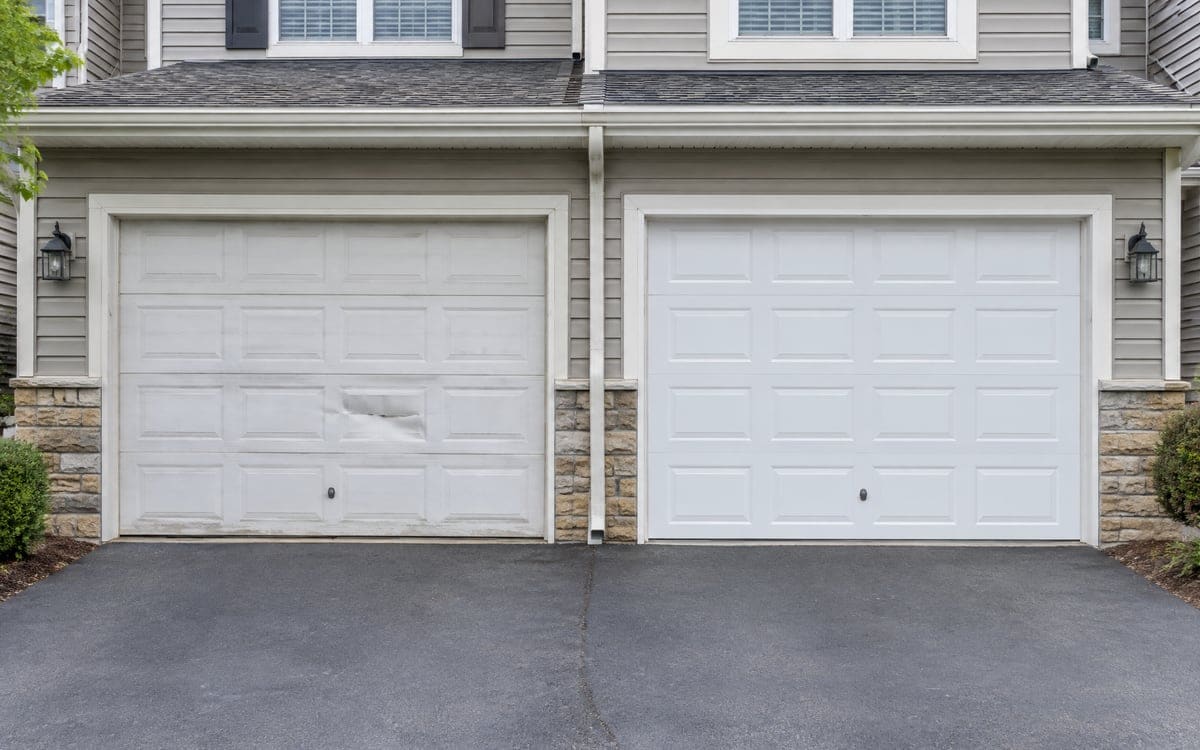
One broken part on a sound door gets fixed
The clearest fix-it case is a single part failure on a door that is otherwise in good shape. A broken spring, a snapped lift cable, a worn roller, a torn bottom seal, a dented section whose model is still stocked. Each of those is a known job with known parts. The surrounding door and opener still have life in them. The repair is almost always cheaper and almost always the right answer.
A spring repair on a sound door is the common example. One or both torsion springs get swapped (both at once on a two-spring door), the cables get checked while the door is being set, and the technician runs the balance and reversal checks before leaving. The door is back in service with no change to the rest of the system.
Missing parts can decide it for you
Garage doors do not stay in production forever. A door whose manufacturer stopped making the sections, or whose model number no longer has matching hinges and struts available, is a door whose repairs get harder each time. The section you need is from a different generation, the colors do not match, the hinges have a different pitch, and the installer has to piece things together.
For some doors, this is a hard stop. If a section fails and no matching one exists, replacing a single section is off the table. The answer becomes a new door, because the alternative is a visible mismatch and a weakened door at the swapped section.
A technician will check the door label and model number before quoting a panel. If the model is gone, the decision has already been made for you.
Three repairs in a row is a pattern
One repair in a year is just a repair. When the same door needs three in a short stretch, that is a pattern. The common path is: springs replaced; opener fails a few months later; a cable goes within the year. Each one is a legitimate standalone fix. Together they are a system reaching the end of its working life all at once.
A pattern of repairs is also hard to notice from inside it. Each visit feels like the last one. The paperwork from past repairs is the easier way to see it. If the same door has three or more repairs across the last two years, replacement is worth talking about.
An opener with no sensors tips the balance
The two small photo-eye sensors near the floor, one on each side of the door, are standard on openers today. On an older opener that has no photo eyes at all, the opener has no way to reverse the door when a kid, a pet or a car is in the path. A door that comes down on anything in the way can injure a person.
A sensor retrofit on a pre-sensor opener is usually not available. The opener itself has to be replaced. If a sensor-less opener is on the garage, a new opener is often part of the next door decision whether or not the door itself needs replacing. On a door that is also old, pairing the opener with a new door is often cleaner than two separate visits.
Townhome and association rules can narrow the choice
About 15 percent of the village's housing is single-family attached, which means a lot of townhomes. On an attached development, the garage door is often part of the exterior that the association controls. Style, color, window pattern, hardware finish, even the brand can be in the rules.
Association rules do not change whether the door needs replacing; they change what the replacement can be. For a townhome owner, the first call before scoping a replacement is to the association or the management agent. The door choice narrows fast once a style guide is in play, and that narrowing can change the cost. The decision is still the owner's.
The permit question sits with the owner
The property owner is ultimately responsible for making sure a permit is obtained before any work begins. On a repair, the question of whether a permit applies is one for the Village's Development Services Department to answer. On a full replacement, the same office is the right one to ask.
Ask whoever does the work whether they will file it. Either way, the Village holds the owner responsible. The permit question is a short piece on what the Village publishes and what it does not.
| Signal from the door | What it usually points to |
|---|---|
| One part failed, rest sound | Fix |
| Sections cracked through at multiple points | Replace |
| Model gone, no sections available | Replace |
| Opener with no safety sensors | Replace the opener, consider the door |
| Three repairs in a short stretch | Replace |
| A single dent in a current model | Fix the section |
| Spring broke, door otherwise fine | Fix |
| Rot or rust eaten through a bottom section | Replace |
| Association rules allow only one door style | Replace to that style |
| A sound door and a tired opener | Replace the opener |
Read the signals across the whole door, rather than making the call from a single row.
A written contract comes with the bigger job
Illinois has a specific requirement that attaches to a replacement more often than a repair. Under the Act, before a job above the statute's cost line, the contractor must give a written contract or work order to sign that states the total price (parts and materials included), any estimate charge, and the business's name and address. A full door replacement is almost always on the larger-job side of that line.
What that means on the ground: a replacement job comes with a document to read, a signature line and the state's Consumer Rights Acknowledgment Form on larger jobs. How repair prices add up covers reading a quote line by line.
A decision table for the kitchen counter
The short version: spring, fix; cable, fix; one roller or one hinge, fix; one dented section in a current model, fix. A door with sections cracked through, a model with no parts, and three repairs in the last two years: replace. An opener with no sensors on a door that is also old: replace both. A townhome with association rules on style: scope the replacement to the rules.
For a door that still has useful life in it, the fix side wins almost every time. A full replacement is for when the signals above pile up, rather than when one spring breaks. Choosing a new door comes after the decision to replace. On older houses in particular, doors on 1960s and 1970s houses shows where this decision tends to land.
A good technician will tell you which signals they see on your door, and will not push a replacement when a repair makes sense.