What is wrong with the seal?
The bottom seal is a rubber or vinyl strip that slides into an aluminum or steel retainer along the bottom of the door. It squashes against the slab to shut out wind, water and vermin. When daylight shows under a corner, or when a line of leaves blows in on a dry day, the seal, the retainer or the floor itself is where our visit starts.
1. Light and gaps along the bottom
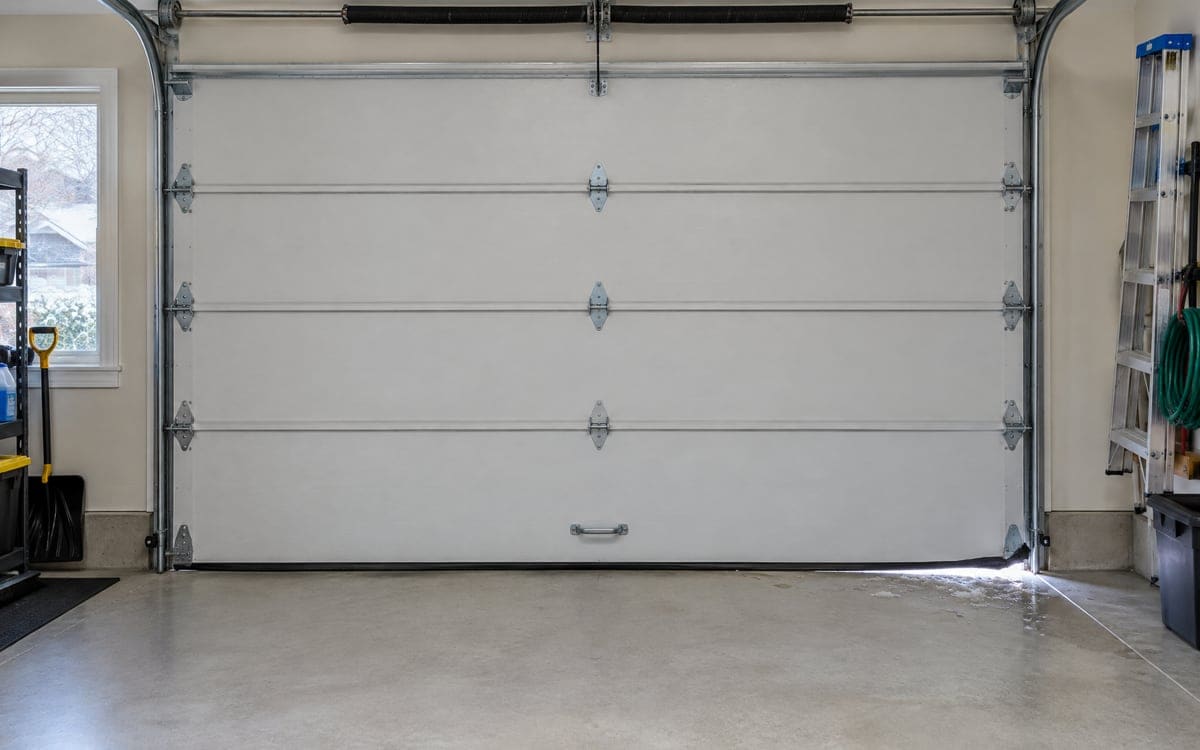
We close the door and watch where daylight shows through. One corner, both corners, a long middle gap or wavy gaps across the whole width each point in a different direction. We note each one before touching anything.
2. The bottom seal's rubber and the retainer it slides into
Old seals go hard, split, flatten or tear off at a corner. The retainer the seal lives in can rust at its ends and lose grip on the rubber. We tug the seal gently to see whether it still seats, and look along the retainer for a bend or a rotted bottom section edge.
3. An uneven floor or a sunken slab
Even a new seal cannot hide a slab that has sunk at a corner or wears a worn groove across the middle. We lay a straight edge on the slab under the door and read the gap. Where the floor is the problem, we size the seal to the worst gap and often add a threshold seal fixed to the slab.
4. The side and top stop molding
Air leaks at the sides and top come from stop molding, the thin wood or vinyl strip the door closes against. When the stops have warped, split or lost their weather strip, cold air comes in with the door closed. We check both jambs and the header before calling the fix complete.
5. A seal frozen or stuck to the slab
In cold weather a wet seal can freeze to the slab overnight. Running the opener against a frozen seal strains the opener, risks tearing the seal and can throw the door off its track. We never force a frozen door with the opener and never pry one up by hand. We thaw it, free it and look at why water sat under it in the first place.
6. The opener's close limit after a new seal
A thicker seal, or a seal that squashes harder, changes how far down the door needs to travel. We set the opener's close limit and close force to the new seal so the door seats cleanly without reversing. The settings have to be tuned to the new seal at the same visit, or the door will bounce back up.
Seal and stop terms we use: bottom seal (also called an astragal), the long rubber strip at the bottom of the door; retainer, the metal channel the seal slides into; T-style seal and bulb seal, the two common shapes for the retainer slot; threshold seal, a wedge-shaped strip fixed to the slab; stop molding, the strips the door closes against along the jambs and header.
| Symptom | Likely cause | What it usually needs |
|---|---|---|
| Daylight at a corner | Torn or shrunken seal, or a sunken slab corner | New seal, sometimes a threshold strip too |
| Water or slush inside after a thaw | Flat seal or a low slab | New seal and often a threshold seal |
| A long split along the seal | Age, cold, dog or rodent damage | Replacement seal in the same retainer |
| Seal frozen to the slab | Water pooling under the door | Thaw and clear, then a new seal and a threshold |
| Drafts at the sides with the door closed | Worn stop molding or missing side weather strip | New stop molding and side seals |
| Door reverses after a new seal | Close limit or force not reset for the new seal | Opener settings tuned at the door |
A door that reverses after a fresh seal often needs the photo-eye sensors realigned at the same visit, since the two tend to come up together after a seal change.
Repair or replace
When we replace only the rubber
A sound retainer with new rubber slid in handles most seal calls. We size the rubber to the retainer slot (T-style or bulb), cut it a bit long, feed it from one end, and trim. If the stops and threshold are sound, new rubber is usually the whole job.
When the retainer or the bottom section goes too
A rusted retainer, a crushed one from a car bump, or a bottom door section that has flaked at its lower edge means more than new rubber. The retainer gets replaced, and sometimes the bottom section with it. A rusted-through bottom section lives on our panel replacement page.
We tell the two apart at the door: tug the seal, press the retainer edges with a thumb, and look up the inside of the bottom section for a line of rust bloom. If the metal is sound we replace rubber only. If it flakes under a thumbnail, the retainer goes with it.
What a technician brings
Most seal visits go out with a few lengths of T-style and bulb seal in common sizes, a short piece of retainer, a threshold strip, side and header weather stripping, soapy water for the seal slot, and a sharp knife. We bring a straight edge for the slab check and the right end caps for the retainer. Having those on the van means most seal visits finish in one trip.