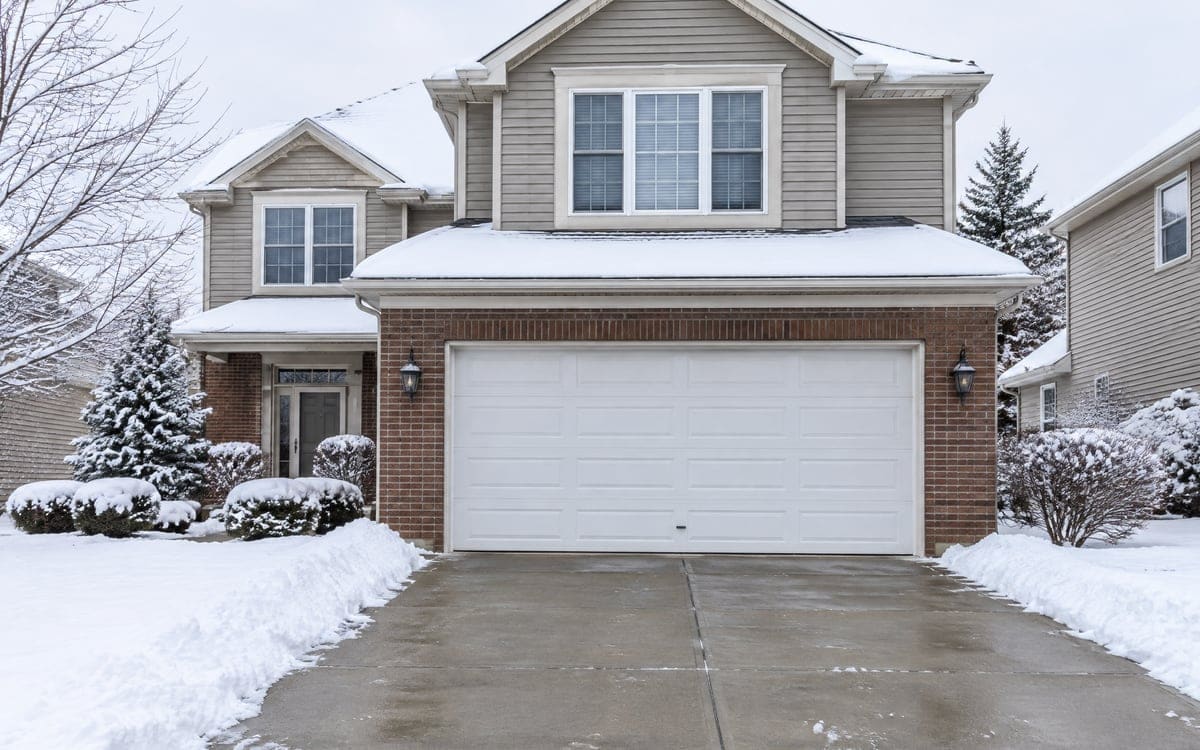
An attached garage shares a wall with the house
11,626 of the village's 19,335 housing units, about 60 percent, are single-family detached homes, and another 2,833, about 15 percent, are single-family attached homes. On a detached house with an attached garage, there is a wall and a ceiling where the garage meets heated space. The garage door is one of the big exposed surfaces that affect the room behind that wall. An uninsulated door is a cold panel the size of a small living room wall.
Insulation on that door changes the garage, yes, but mostly it changes what the shared wall is facing. A cold garage adds to the heating load on the room next to it; a less-cold garage, with the same house heating, means a warmer room next door.
The door into the house has its own Village rule
The attached garages handout the Village posts is specific about the swing door between the garage and the house, not the overhead door. The handout requires the interior door to meet one of a few material specs: solid wood at least 1 3/8 inches thick, solid or honeycomb core steel at that same thickness, or 20-minute fire-rated construction, and it must self-close by a door closer or spring-loaded hinges.
The rule matters here because the house door and the garage door work together. A tight, insulated garage door keeps the garage closer to the outdoor low that the house door has to hold back. If the hinges have been swapped for ones that no longer self-close, the garage door insulation can only do so much; air moves through the open house door every time it does not swing shut.
An insulated door is heavier, quieter and stiffer
An insulated door is physically different from a bare steel one. It is heavier, quieter in motion, and stiffer against a bump from a car bumper or a thrown ball. From inside the garage, it feels less like a drum skin and more like a wall.
The temperature difference is real but smaller than brochures suggest. On a January afternoon with a bare steel door, the inside face of the door can be close to the outdoor temperature. With an insulated door, the inside face is closer to the garage air temperature, which is closer to the house.
Foam cores come in two kinds
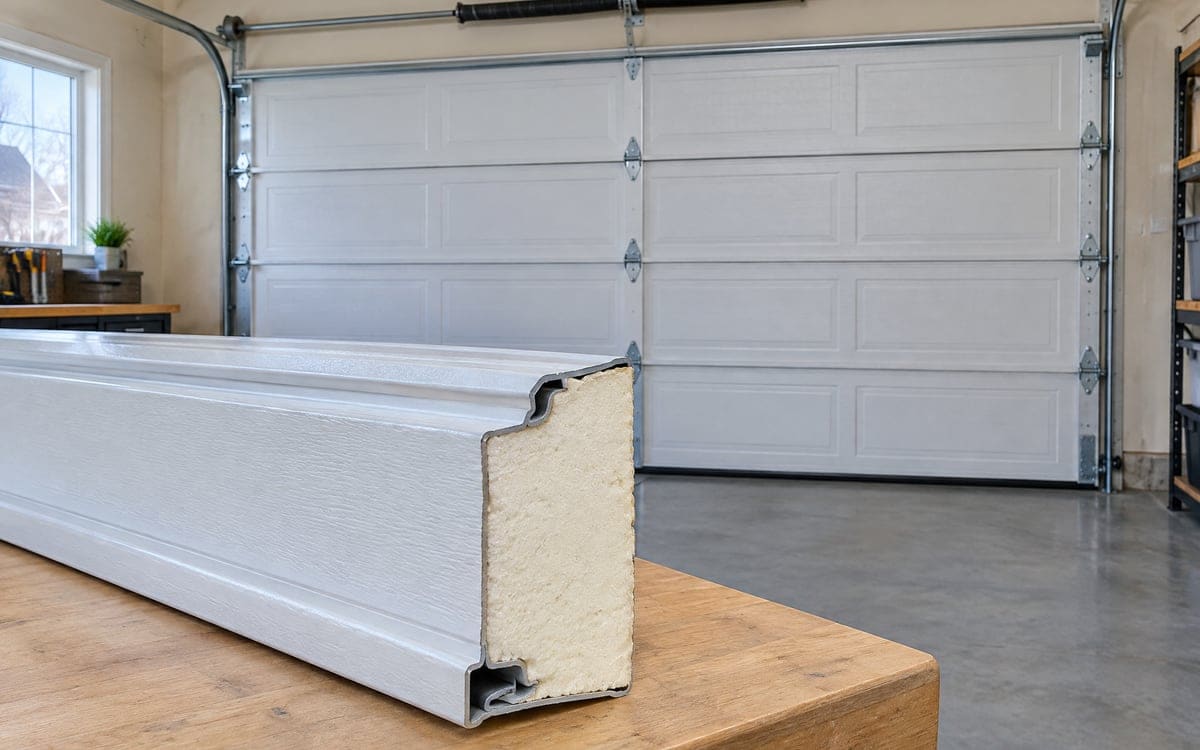
Insulated garage door sections usually have one of two kinds of foam between the outer and inner steel skins. Polystyrene foam is cut into blocks and fitted into the section cavity, often with gaps. Polyurethane foam is injected and expands to fill the cavity, bonding to both skins as it cures. The polyurethane bond also stiffens the section, which is part of why injected doors tend to feel more solid.
Both are foam. The difference the owner notices day to day is less about the thermal number on the sticker and more about the stiffness and the quietness. For a buyer who wants to compare them, a technician can walk through what each means on the door being considered. Numbers printed on brochures do not always match what the installed door delivers once seals and fit are accounted for.
The edges leak more than the panels
A sealed, insulated door is still a door with four edges and a floor seam. Air moves through the seams first, around the top, down each side, across the bottom. The side weather stripping and the top stop molding carry most of that load. The bottom seal and its retainer carry the rest.
On a new installation, the seals are fresh and the fit is good. Years into service, the top stop molding may have cracked at a nail, a side weather strip may have shrunk away from the jamb, and the bottom seal may be flat and torn at a corner. Any one of those lets in more air than a thicker core keeps out. Sealing the edges is almost always the cheaper, higher-return part of the insulation question. The seals are maintenance; the core and the sections are chosen when the door is bought.
| Where cold air gets through | What catches it |
|---|---|
| The seam at the top of the door | Top stop molding, the rubber flap against the header |
| The seams down each side | Side weather stripping or stop molding with a rubber lip |
| The seam at the floor | The bottom seal and its retainer |
| The gaps between sections | Interlocking section edges, more effective on insulated sections |
| The panels themselves | The door's core, insulated or not |
Winter here is long enough to notice the difference
The local climate makes insulation easier to feel than it would be somewhere warmer. Chicago's normal January mean temperature is 25.2 degrees, and the coldest January in official records from 1873 to 2023 was January 1977 at 10.1 degrees. Northern Illinois averages 140 days a year at or below 32 degrees and 16 days at or below 0 degrees.
Across that stretch, an insulated door on an attached garage can keep a closed, sheltered garage noticeably warmer than an uninsulated one. That is not a precise promise. It depends on the garage, the seals, how often the door opens and how often someone drives in with a warm car. In a house where the bedroom over the garage runs cold, that difference often shows up as warmer feet in the morning.
A heavier door needs springs to match
Insulated sections weigh more than bare steel ones. The springs on the door are sized to the door's weight; a door that gets heavier needs springs that lift the new weight. On a new install, the installer picks springs to match the new door. On a kit retrofit, where a homeowner adds panels to an existing door, the springs often get left alone and are then undersized.
A door that is heavier than its springs will strain the opener and wear the springs faster. Springs matched to door weight is a common part of the same visit when a door is being replaced with an insulated one. The opener also has a role: an opener sized for a heavier door is sometimes the quieter answer when the existing opener is already old.
Kits for an existing door have limits
Insulation kits do exist. They are foam board or foil-faced panels that get cut to fit each section and held in with clips or adhesive. On a bare steel door that is otherwise in good condition, a kit can take the edge off the cold without a full replacement.
A kit has limits worth naming. It does not change the section skin, so impacts still dent it. The adhesive and clips sometimes let go over hot and cold cycles. The kit adds weight that the springs may or may not handle. And a kit does nothing for the seals, which are usually the bigger issue.
For a garage that will keep its current door for a few more years, a kit plus a seal replacement can be a reasonable patch. For a garage that is next on the replacement list anyway, the kit money is often better spent on the full door.
When insulation makes sense at replacement time
The short list: on an attached garage that shares a wall with living space, insulation is usually worth it, especially if there is a bedroom over the garage. On a detached garage with no heated space in play, insulation is a comfort decision rather than a performance one.
On a house with the heat already on in the garage, an insulated door changes how often the heater runs. On a house with no garage heat, an insulated door changes the floor temperature and the feel of the space without turning it into a room.
The other factor is the shared wall. If the house side of that wall is cold in winter, the door is only one of the fixes; the wall insulation and the house door's seal matter at least as much. Replacing an uninsulated door with an insulated one is the biggest change here, though those other repairs still have their place. A new insulated door is the right answer when the current door is also at the end of its life.
For attached garages on older homes, attached garages on older houses gives the broader context. For a yes-or-no on whether to replace the door at all, fix or replace is the companion piece.