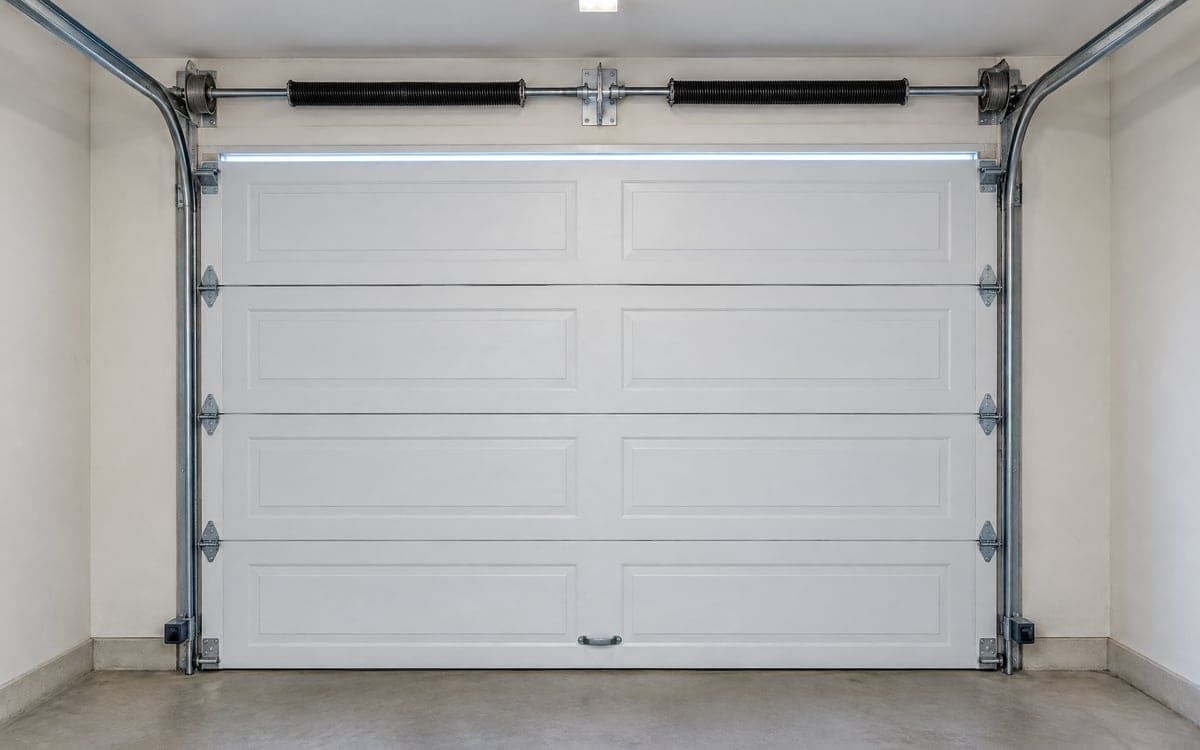
The bottom seal is only one of three
The three parts of a garage door's weather barrier are the bottom seal at the floor, the side stops down each jamb, and the top stop across the lintel. Together they form a soft gasket around the door's face. One of them failing on a cold day is enough to let a steady draft into an attached garage.
The bottom seal is the strip of rubber attached to the lower edge of the door, pressed to the slab when the door is closed. The sides and top are a different piece: a profile mounted to the frame of the opening, with a flexible flap that presses against the outside face of the closed door.
Side and top stops seal against the face of the door
A side stop is the vertical length of wood or vinyl screwed or nailed to each side jamb. On older openings it is a wood stop with a strip of rubber stapled along its inside edge; on newer openings it is a one-piece vinyl stop with a bulbous flap molded onto it. The top stop is the same kind of piece run horizontally across the lintel above the door.
When the door closes, the stops are not holding the door shut; the opener's trolley holds a closed opener-driven door down, and a lock holds a manual door closed. The stops are a dust and weather barrier that lies against the outside of the closed door. On a straight opening with a straight door, the flap presses evenly from top to bottom and the perimeter is sealed. On an opening that has moved over the decades, or a door that is bowed or dented, the flap only touches in places.
Gaps show as light and drafts before they show as water
Rain and snow run down the face of the door rather than through it, so a bad side seal looks dry on the garage floor until a wind-driven storm pushes water sideways against the jamb. The way a side or top gap announces itself is light during the day and a cold draft overnight; water comes much later.
To check: close the door, then stand inside the garage with the lights off and look at the perimeter. A line of daylight along a jamb or across the top of the door is where the stop has pulled off the door. A thin, bright line is a minor fit problem; a wide line, especially one that varies in width along its height, is a stop that has pulled away from the jamb or a stop profile that has gone brittle.
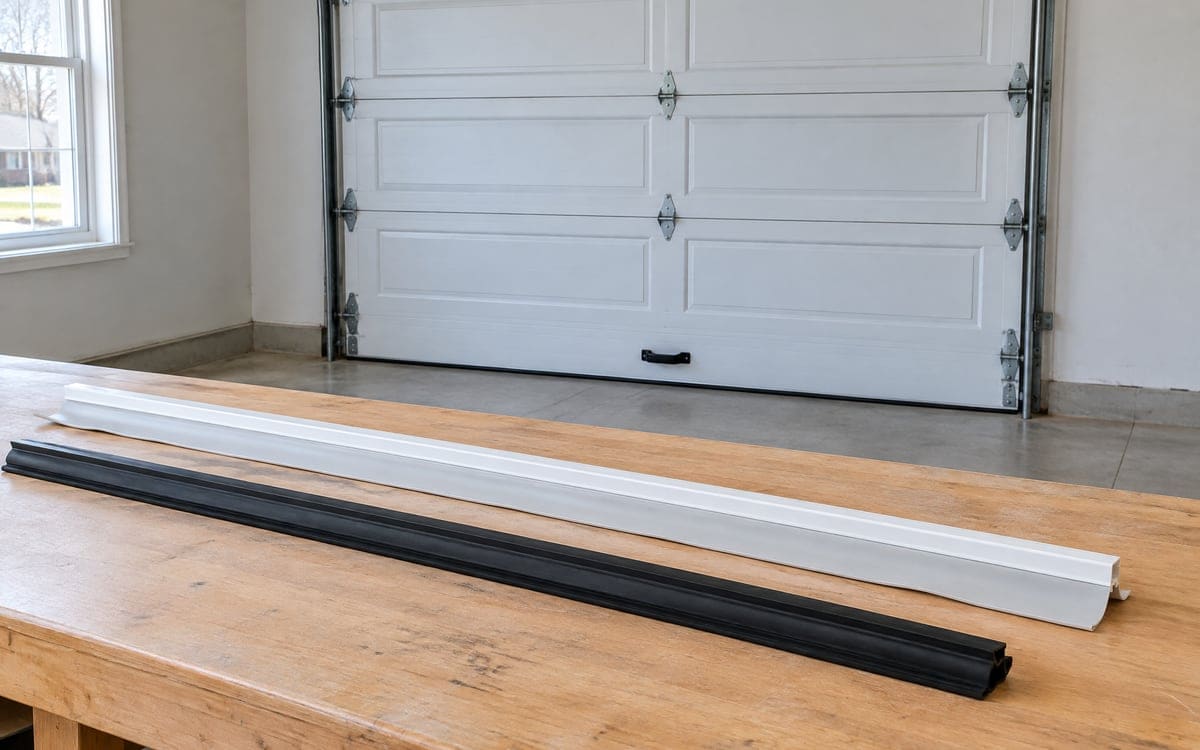
What a Hoffman Estates January does to a leaky perimeter
In the coldest stretch of winter, every square inch of gap in a garage perimeter adds to a draft that works into the house. The normal January mean temperature at O'Hare is 25.2 degrees, and the coldest January in official records from 1873 to 2023 was January 1977 at 10.1 degrees.1 An attached garage sits between those outside temperatures and the wall it shares with the kitchen or laundry room, and the perimeter around the door is what separates them.
Fixing the side and top stops is one of the smaller jobs on a garage door, but on an attached garage it is one of the ones that gets noticed first inside the house. A fitted perimeter also quiets the garage, because wind cannot find a slit to whistle through.
Why a warped stop is replaced rather than nailed tighter
The common homeowner move is to nail a warped or pulled-away stop back onto the jamb with the hope that it will seal again. Sometimes that works for a season on a stop that is still straight and still has flexible rubber on it. More often it does not.
A warped stop pulls away because the wood or vinyl has moved out of true against the jamb; the nails were just the thing that gave in first. Nailing it back on tightens the attachment at the point of the nail, but the stop still bows elsewhere and the gap stays. A dried-out rubber flap on an older stop does not have enough give to seal against the door no matter how well the stop is attached. Replacing the whole piece of stop, cut square and tacked onto a sound jamb, closes the gap for real.
What the retainer, the jamb and the lintel each do
Three parts of the opening carry the perimeter seal around the garage door. The retainer at the bottom of the door holds the floor seal. The side jambs, the vertical wood frames of the opening, carry the side stops. The lintel, the horizontal frame piece above the door, carries the top stop. The door itself has nothing on its sides or top; it just closes into the gasket.
| Perimeter zone | What makes the seal | What fails first |
|---|---|---|
| Floor | A rubber bulb in a retainer on the bottom section | The bulb hardens or tears at the corners |
| Sides | A vinyl or wood stop on each jamb, with a flexible flap | The flap goes brittle; the stop pulls away |
| Top | A stop across the lintel, with the same flap | Daylight along the top of the door, often at a corner |
| Behind the door, inside | The jamb and the slab, both static | Settlement; the jamb twists or the slab lifts |
When sides and top matter more than the bottom seal
On an attached garage, the sides and top can matter more than the bottom seal, because warm air from the house side of the shared wall leaks out through gaps high on the opening while the bottom seal is still doing its job. The perimeter around the door sits right between the cold outside and the wall the house shares with the garage.
Door insulation handles heat loss through the panels; perimeter stops handle the moving air that would carry heat around them. Both have to be in condition for the door to hold heat. For heat loss through the panels themselves, see attached garage insulation.
A perimeter check from the floor
Close the door, kill the garage lights, and stand back inside the garage. Look along the full height of each jamb and across the top of the door. Daylight along a jamb or across the lintel is where the stop has stopped meeting the door; a wider line is a stop that has pulled away or gone brittle. The jambs run next to the vertical track and the lift cable, so this is a look, not a hands-on check.
For a service visit that fits new side and top stops together, a tune-up is the usual pairing, because a technician can set the door's position in the opening while the stops are off and the hardware under the perimeter is reviewed too. A bowed lower section that keeps the stop from seating is a panel job. For the salt side of a worn perimeter, see the plow season rust walkthrough.