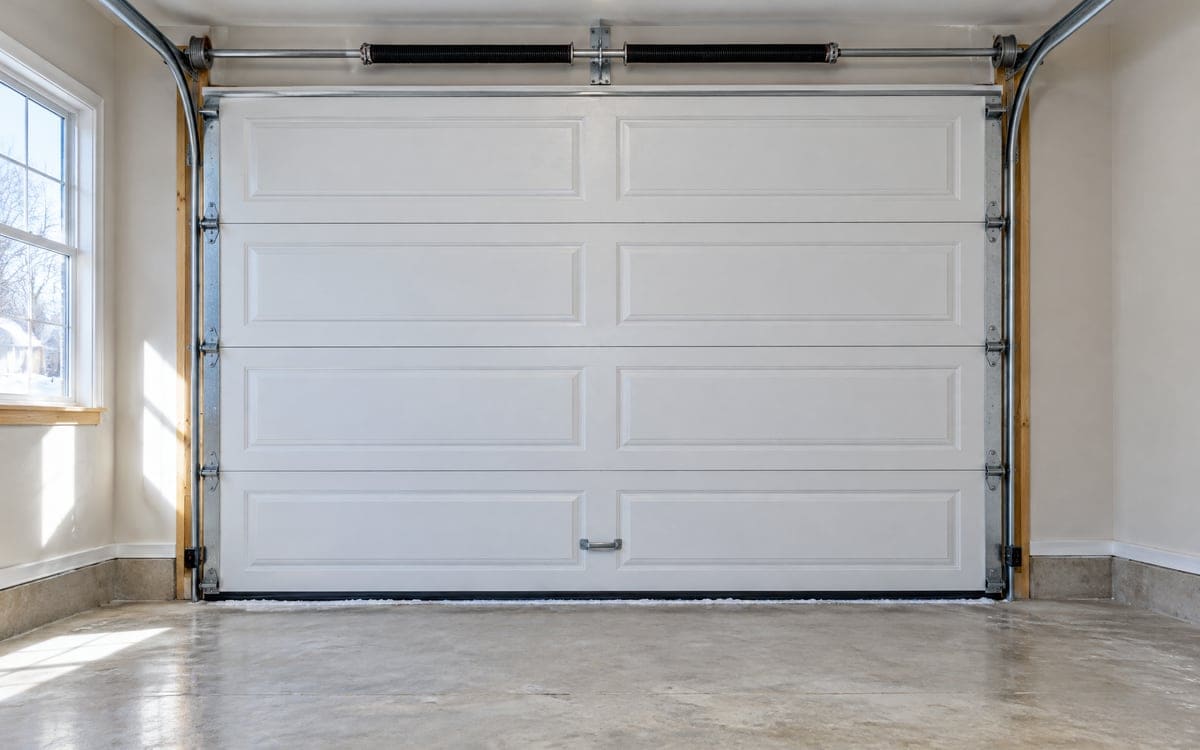
Plows roll when two inches have fallen
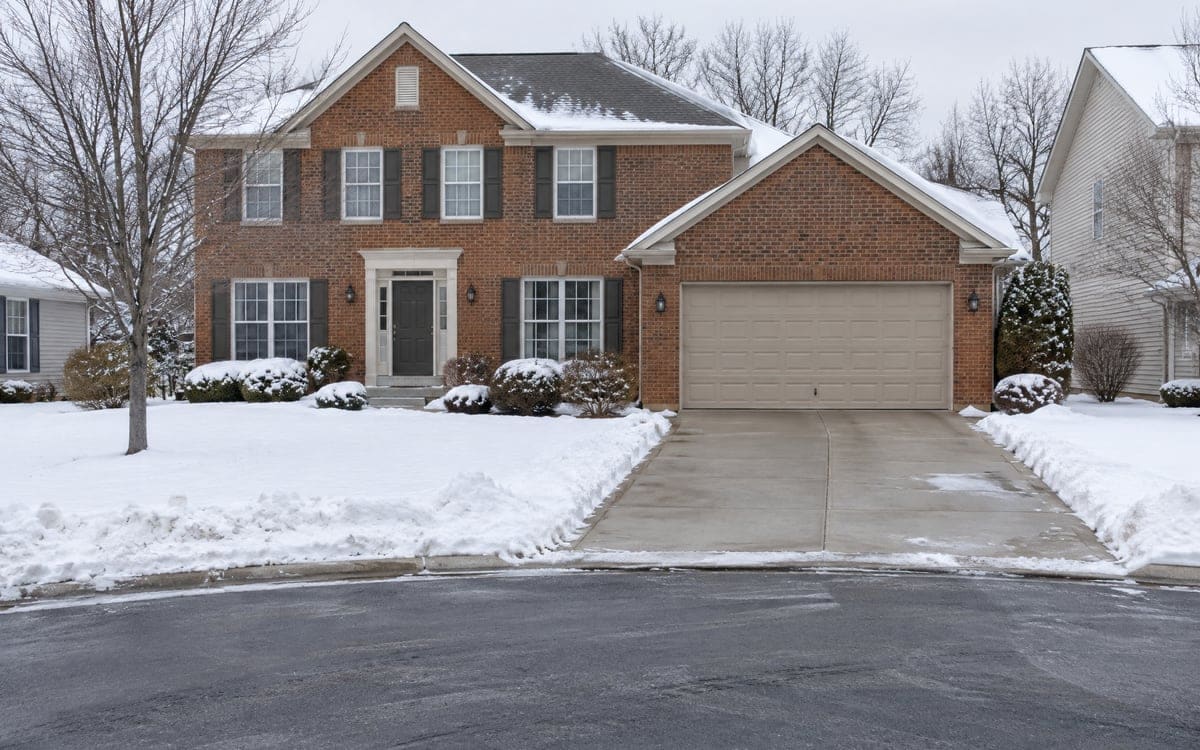
The timing of a plowed snow pile is set by the village's plow schedule. Hoffman Estates Public Works starts plowing when two inches or more of snow has accumulated, based on reports from O'Hare Airport, and plows major streets first, then side streets and cul-de-sacs.1 A house on a cul-de-sac often sees the plow after the main roads are done, and the ridge the plow leaves across the mouth of the driveway can sit until the thaw. For a house on a side street, the same ridge arrives on the second pass.
Slush at the end of the driveway melts toward the door
The ridge of plowed snow at the end of a driveway does not stay where the truck left it. Sun through the afternoon melts the top layer, and the whole pile shifts toward the house with every day of thaw. By the time it reaches the apron, it has turned into salt-gray slush that sits in a shallow pool against the bottom of the door.
Without a threshold strip, the pool is held off the garage floor only by the bottom seal's rubber bulb, which has to press to a slab that is already wet, cold and often slightly higher at the center of the opening than at the sides.
A threshold strip turns water before it reaches the seal
A threshold strip is a long, low profile piece, usually rubber or a stiff vinyl, that is adhered or screwed to the slab at the opening. It rises an inch or so off the floor and runs the full width of the door. When the door closes, the bottom seal above it presses down onto the top of the strip, not the raw concrete slab. From outside, water flowing toward the garage hits the leading edge of the threshold, is held back by the raised profile, and runs along it to one side instead of under the door.
That is the whole trick: the threshold diverts the water rather than sealing against it the way a weatherstrip does. A threshold alone cannot keep snow out of a garage. Paired with a sound bottom seal, it keeps the pool of thaw water on the outside and gives the seal a flat, raised strip to press against instead of an uneven slab.
It works with the bottom seal, not instead of it
A threshold is sometimes treated as a replacement for a worn seal. The two actually handle different leaks. The bottom seal is the rubber on the door and blocks air when the door is closed. The threshold is on the floor and diverts water before the seal has to deal with it.
A worn seal on a sound threshold leaks air and lets slush creep in at the corners. A new threshold under a torn seal leaves daylight at the corners of the door. When a seal has gone and the slab is uneven, both need doing. For the different profiles a bottom seal comes in, see garage door bottom seal types.
Refreeze and a torn seal
The hard part of winter at the floor is what happens when the temperature drops. A sound seal, pressed flat on a threshold, releases cleanly later. A torn seal, or one that has flattened and does not spring back, is a seal the opener is likelier to tear further.
A threshold reduces the depth of water that is there to refreeze, though it cannot stop freezing on its own. A door frozen to the slab is the winter fault that a door that will not open or close in the cold covers in more detail.
When the slab slopes the wrong way
Some driveways and some garage slabs slope toward the house. On those, water runs into the garage no matter what the seal is doing. A visual check: on a bright afternoon in fall, run a hose across the apron for a minute. If water pools against the door and does not run back out, the slope at the opening is level or runs inward.
A threshold strip is the practical fix on a slab that slopes the wrong way, because the raised profile holds the water back and lets it find a side exit. On a slab that runs more than slightly toward the house, a threshold alone will not keep up with a hard rain or a heavy thaw; concrete work on the apron is the lasting option, and it is not a garage door service's share of the work.
The salt side of threshold work
A threshold also raises the contact point between the door and the slab. From January to April 2025, Hoffman Estates Public Works used 2,700 tons of salt2 across the village's streets. For the full picture of what salt-season road operations look like, see the plow season rust walkthrough.
Garage door threshold seal installation and sizing
A garage door threshold seal installation starts with cleaning the slab across the full width of the opening. The strip is cut to the inside measurement of the opening and set with construction adhesive on a dry, swept slab. The adhesive bead has to run the full length, because slush that works under a loose strip is worse than no threshold at all.
Sizing is the detail that trips up a DIY install. A threshold cut past the inside measurement buckles and holds the door off the slab; one cut under the measurement leaves a gap at a corner. The strip is measured jamb to jamb with the door closed, and set so the bottom seal lands squarely on the raised center of the strip. A seal that lands off center wears out faster than it would on a flat slab.
| Where it helps most | Where it helps less | Where it is the main fix |
|---|---|---|
| Driveways with a slab that is level at the door | Perfectly sloped driveways on a sound apron | Slabs that slope slightly toward the house |
| Doors with a sound bottom seal | Doors with a torn seal (fix the seal first) | Doors where the seal keeps freezing to the slab |
| Attached garages with a thaw problem | Detached garages where water never pools | Garages where plow slush sits for hours |
| Lower sections and hardware worth protecting | Doors already due for a lower-section replacement | Doors with corrosion starting at the bottom corners |
On an opener that has started straining on cold mornings because the seal is frozen in place, the opener's limit may need resetting once the seal frees up; opener repair and limit adjustment is the service that covers that. A seasonal tune-up checks both the seal and the opener's limits.