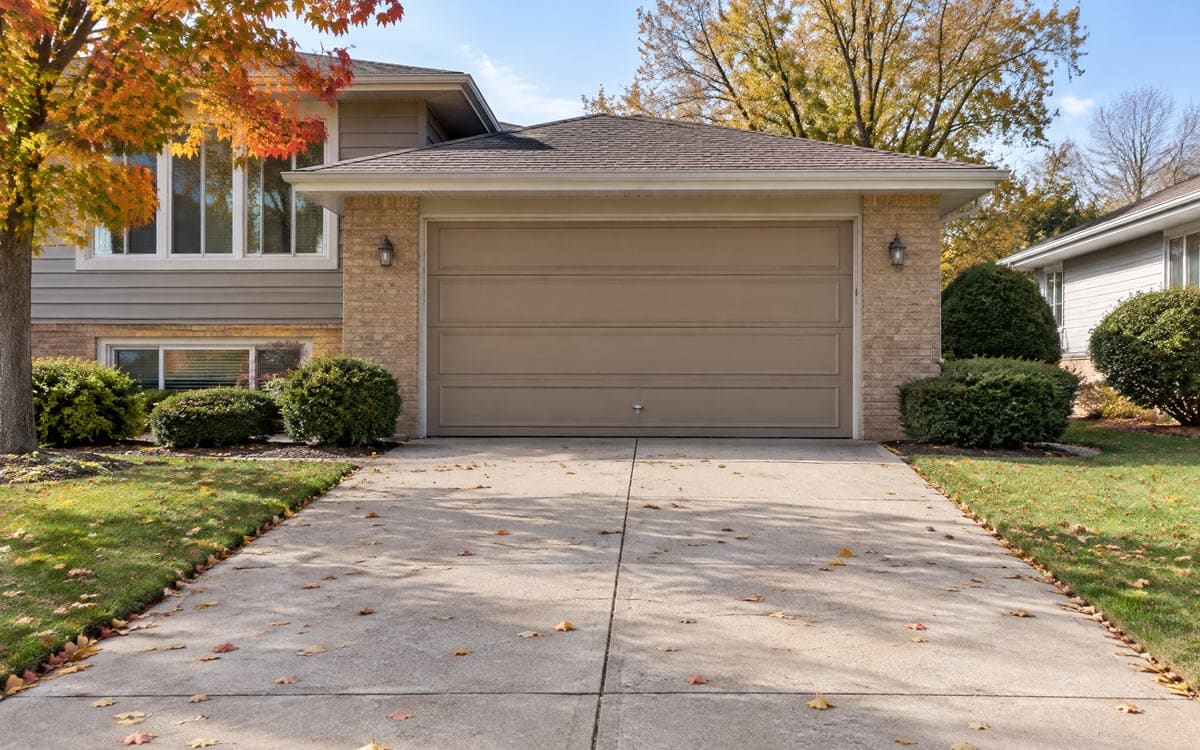
The freeze stretch normally opens in mid October
The normal first autumn temperature of 32 degrees or lower at O'Hare comes on October 19, based on 1991 to 2020 data.1 The normal is just the average; a cold morning can arrive before it.
Fall is the time to look over the door while it is still warm enough to work on the hardware without hurry.
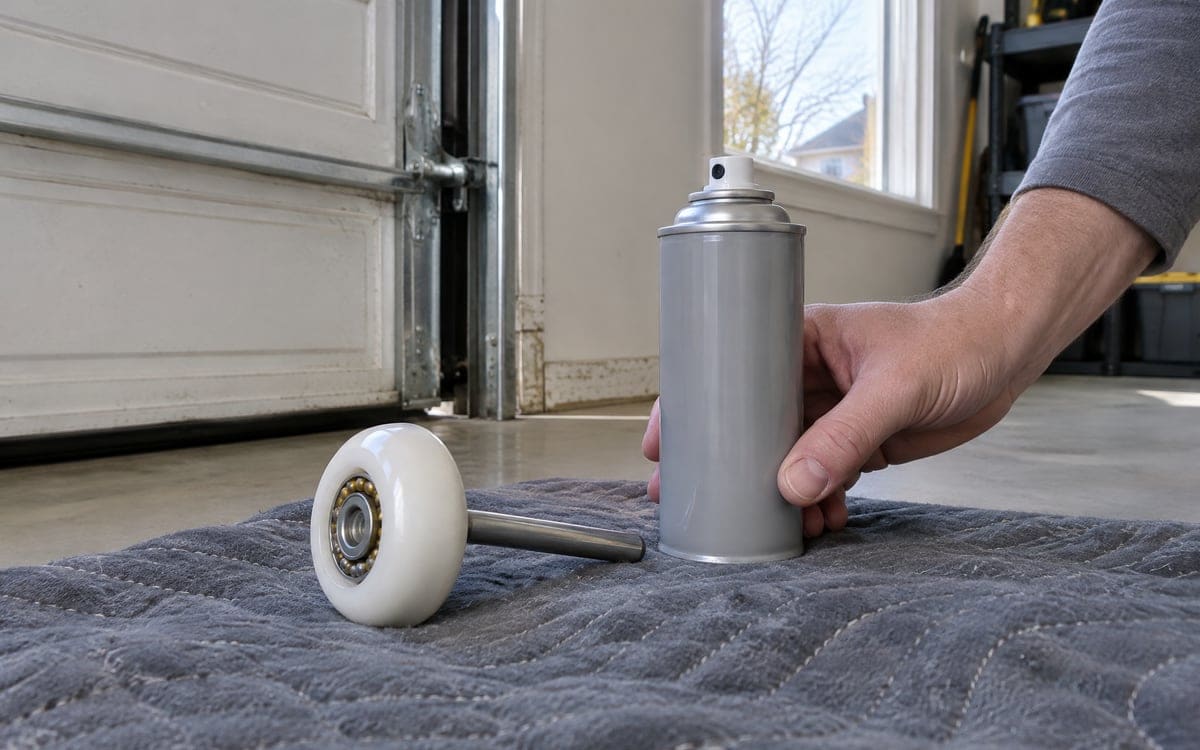
Clear the floor and check the bottom seal before the first freeze
The strip of floor the door closes against is where leaf litter, grit and small branches collect over fall. Sweep it clean so the seal has clean concrete to meet. With the door closed, step outside and look at the bottom corners from the driveway. A line of daylight at a corner is a torn seal or a slab that has settled.
From inside, with the door closed, look at the inside face of the bottom section. The rubber bulb should be squashed flat along its length. If the seal is torn, flattened to the point it does not spring back, or missing from one corner, it is time for a new bottom seal. A seal that cannot press to the floor is the gap that lets heat out and water in all winter.
Watch one full cycle and listen
Stand inside the garage, well back from the door and clear of the tracks. Run the door open and closed with the wall button, not the remote, so the opener works through its full travel without a car in the way.
A healthy run sounds like a steady hum from the opener and a soft rumble from the rollers. A hard thump at the start of the lift, a scrape mid-travel, a chatter from the top of the door, a bang at the end of the close: each one points at a part. A grinding sound tracks back to the opener's gear. A scrape usually traces to a roller that has lost its wheel or a track that has moved. A noisy door almost always needs a worn part replaced, and lubrication rarely solves it.
Watch the door through the open as well. The two sides should rise together with no twist. If one side leads the other, that is a cable or spring issue the technician handles.
Wipe the photo-eye lenses and check their lights
The two small sensors near the floor, one on each side of the door, are the only part of the opener a homeowner should touch, and the only tool for the job is a soft cloth. A cobweb or a smudge across either lens is enough to make the opener refuse to close, or close part way and reverse. Wipe both lenses with a clean, dry microfiber cloth.
Each sensor has an indicator light. On most openers one light is steady when the pair is lined up and talking to each other, and the other blinks when something crosses the beam. Check that both lights are on. A dark eye, or one that goes dark the moment you look away from the lens, is a sign the pair has drifted out of line or the mounting bracket has shifted. That is a sensor repair visit; realignment is not a homeowner job because the brackets sit low on the track where loaded hardware runs.
Hardware lubrication is a tune-up job
Garage door lubrication goes on hinges, roller stems, the opener's drive and the spring, each with its own product and its own method. All of that happens on a tune-up visit. The spring in particular is wound to its maximum when the door is on the floor, so a hand near it can be caught by the coil, which is why no part of the lubrication list is a homeowner spray pass.
The tracks are not lubricated at all. They are a path for the rollers to run in, and anything greasy there collects dust and salt and makes the problem worse.
When the door is loud after a tune-up, worn rollers are a likely cause. Roller replacement is the service for that; nylon rollers run quieter than old steel rollers and last through more winters.
Leave the springs, cables and bottom brackets alone
The parts of the door that hold the weight stay with a technician. The torsion spring above the door, the lift cables that run down each side, the drums the cables wind onto, and the bottom brackets at the two bottom corners are all under tension when the door is closed. A hand on any of them can cause a serious injury without warning.
A fall visit is where those parts get touched safely. A technician sets the door, releases tension, and works through the loaded hardware in order. The homeowner's job is to see the warning signs from the floor and call. A broken spring in the middle of January is a different day from a tired spring caught in October.
The emergency release handle hanging from the opener trolley is not a homeowner tool either. Leave it alone; to stop the opener, turn off the breaker for the garage at the panel.
Plows in Hoffman Estates roll at two inches
Hoffman Estates Public Works starts plowing when two inches or more of snow has accumulated, based on reports from O'Hare Airport, and plows major streets first, then side streets and cul-de-sacs.2 The village's Snow and Ice Control Division handles 161 center-lane miles of roadway and more than 360 cul-de-sacs with 50 full-time drivers and four mechanics.3
Salt arrives on the car's tires with the first plowed snow and settles at the bottom of the garage door. Fall is the time to see the hardware while the lower section is still clean.
Have the spring and balance check done before the plows start
A fall tune-up looks at everything a homeowner cannot: spring tension, cable condition at the bottom brackets, roller wear, hinge play, the opener's travel limits, the door's balance, and the sensors' alignment. A tune-up in September or October catches a tired spring in a dry garage, with a car that is still parked outside the problem.
The alternative is a January morning with the car trapped behind a door that will not open. The repair is the same work either way; the day around it is harder.
| Homeowner can do, from the floor | Technician's job |
|---|---|
| Sweep the floor at the door; look at the seal | Replace a torn or flattened seal |
| Watch one open and close for new noises | Trace a scrape, grind or bang to its part |
| Wipe the photo-eye lenses with a soft cloth | Realign or replace the sensors |
| Note a slow or heavy open and call | Lubricate hinges, roller stems, drive and spring |
| Note a slow or heavy open and call | Measure spring tension and balance |
| Watch for a frayed cable from the driveway | Replace cables and inspect bottom brackets |
For the month-to-month version of this list, a monthly look from a safe distance covers what to check between visits. For the cold-season spring question specifically, winter and springs on an older door picks up where the fall tune-up leaves off.