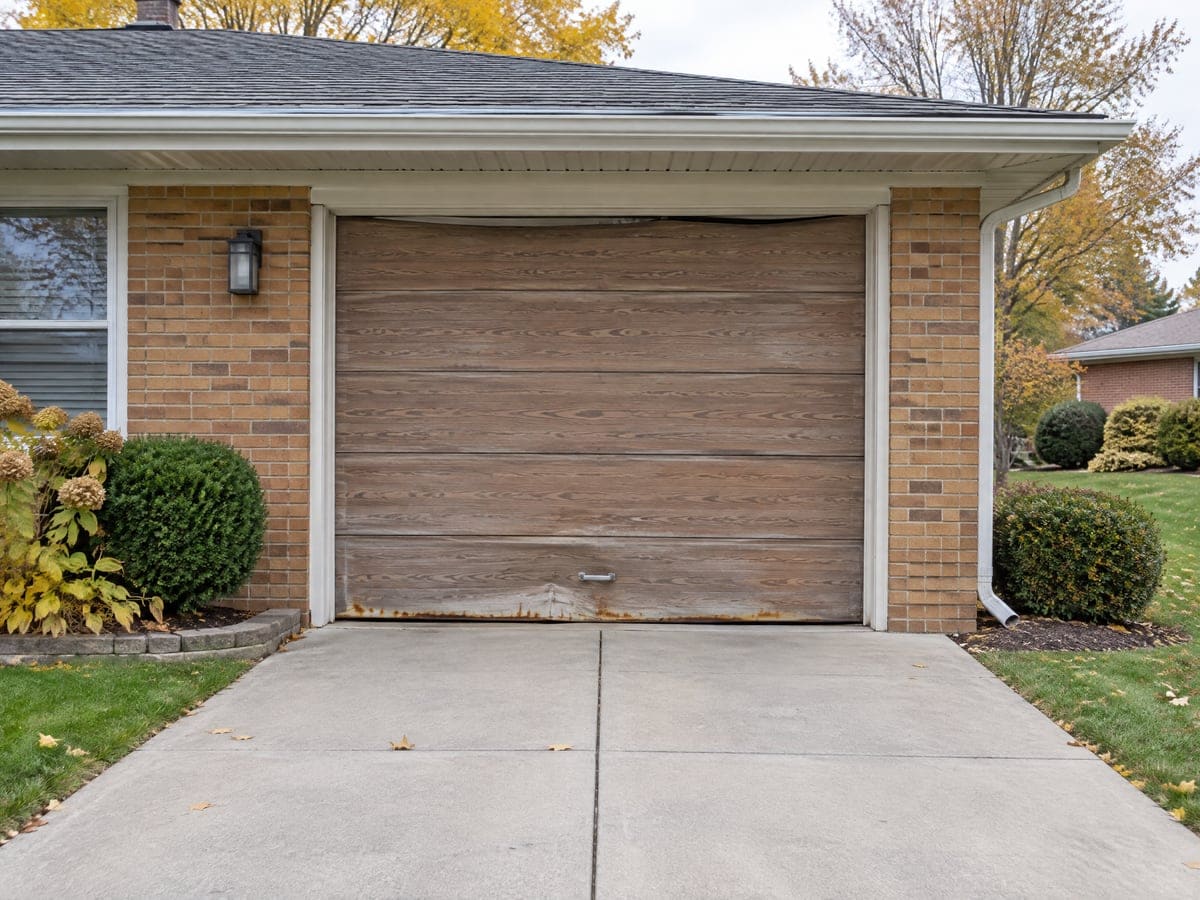
Is this door done?
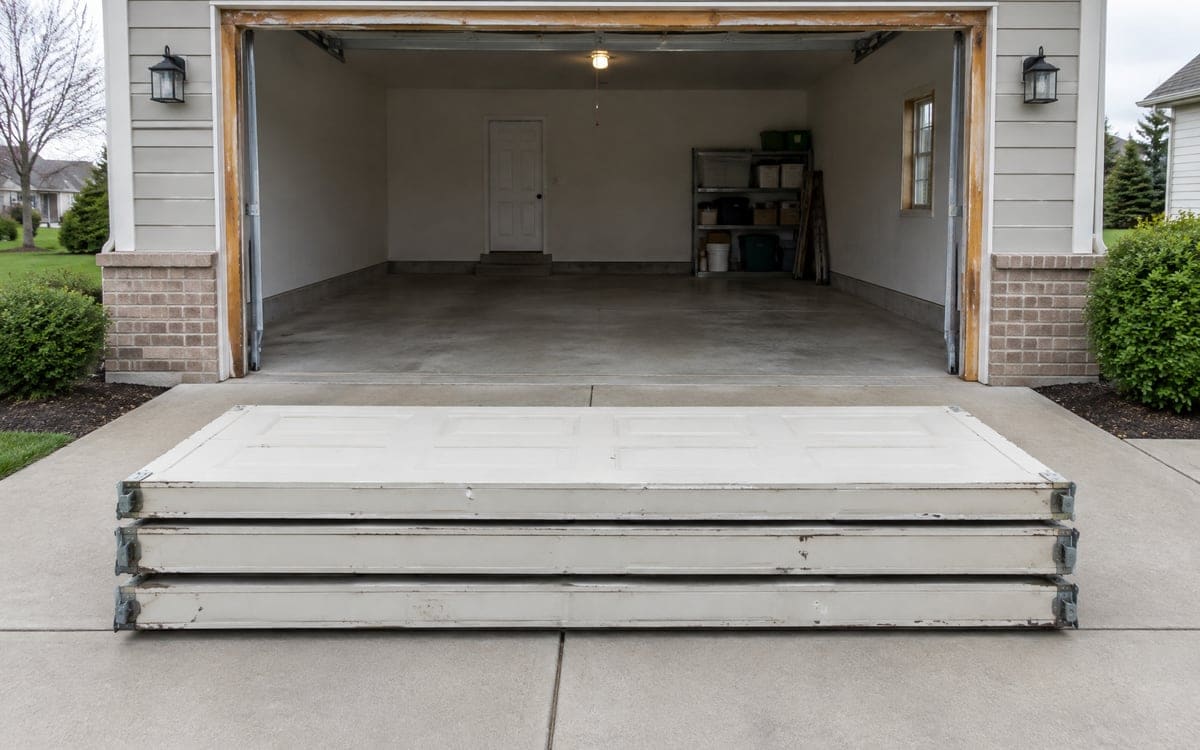
Replacement makes sense when the door has reached the end of its working life. The technician works through the opening, the hardware and the sections in order.
1. The opening, jambs and header
The opening the new door will hang in gets checked first. We measure width and height, look at the wood jambs for rot or splits, and sight the header for sag. A rotten jamb or a sunken slab shapes the price before the door choice does. Choosing the new door runs through what fits.
2. Releasing spring tension safely
The existing door's spring tension is released first, with the door in the right position and winding bars in the technician's hands. This is one of the parts of the job that is never a homeowner task. The emergency release cord stays untouched; the tension comes off the right way.
3. Taking out the old door
The old sections come down one by one. The vertical and horizontal tracks unbolt from the jambs and the ceiling, the spring shaft and the old springs come down, and the bottom bracket at each end comes off.
4. New tracks, springs and cables sized to the new door
A heavier insulated door needs bigger springs and sometimes a larger drum. The new tracks go up plumb and square to the opening, the spring shaft above them, the drums at each end of the shaft, and new cables from the bottom bracket to the drums. All the spring and cable hardware is new.
5. Weather seals and the bottom seal
New stop molding goes along the jambs and the top, with weather strips sealing the door shut. The bottom seal slides into the retainer on the new bottom section. New seals that come with the job are what close the gap between the new door and the slab.
6. Reconnecting or replacing the opener
If the opener is coming along, the trolley hooks to the top bracket on the new door, travel and force are reset to the new weight, and the opener runs the door. If the opener is getting replaced too, the opener install folds in here. On a heavier insulated door, we check the opener size before we hook it to the new door.
7. Balance and reversal tests
The technician releases the opener and lifts the door by hand to check the balance. The door should hold halfway without drifting. A two-by-four under the door tests the reversal with the opener running. If anything needs a small adjustment, that happens before we leave.
Repair this door or replace it
Repair is almost always cheaper on the day. Replacement is almost always cheaper over the life of the next five or ten years, when the door has already reached a certain age.
When replacement makes sense
- One section after another cracks or dents, and the door is a patchwork
- The wood sections at the bottom have rotted through, and nothing above is far behind
- Parts for the door's model have run out, and matches get worse each year
- The springs have failed again and the opener is on its last gear kit
- The door will no longer hold balance halfway
When keeping the door makes sense
- One section is damaged and the rest is sound: one-section work is usually the right call
- The hardware is tired but the sections are fine, so new springs, cables and rollers get the door another working life
- The opener is the real complaint, and the door around it has years left
| Signs the door is done | What they tell us |
|---|---|
| Several sections cracked through | New sections no longer get ahead of the next crack |
| Rotted wood at the bottom section | Water has worked its way up the end stiles too |
| No match for the model from any supplier | Any patch will show from the street |
| Springs failing again and again | The spring size never suited the door, or the door has outgrown it |
| A door that will not hold balance | The sections and the hardware are both past their life |
| An uninsulated door on an attached garage you have started heating | Replacement, not repair, pays for itself |
How do we tell at the door? We look at the sections, the hardware and the springs together, and we read how old the door is from its label. How to decide walks the question out in more detail.
What our installers bring on a replacement
A replacement visit carries the new door sections, new tracks sized to the opening, springs sized to the door weight, new cables and drums, new bottom brackets, a new bottom seal, side and top stop molding with weather strips, hinges and rollers, and the winding bars, drill and ladder for the install.