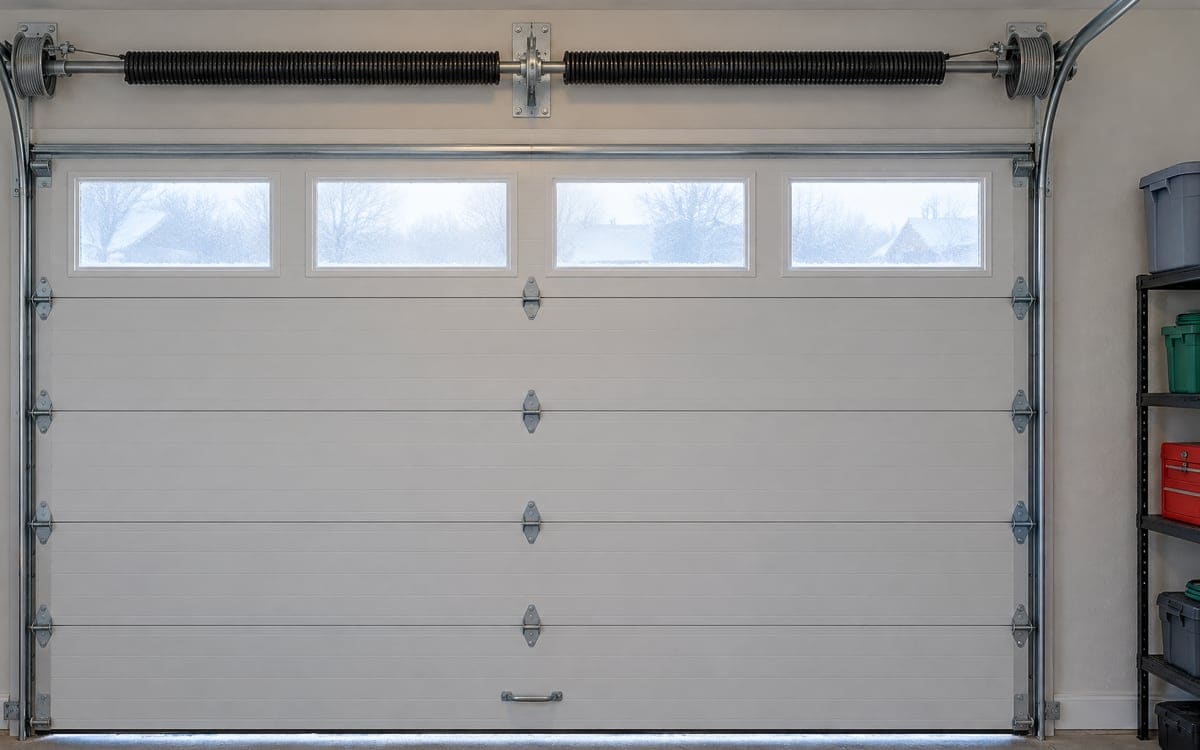
The freeze season normally opens in mid October
The normal first autumn temperature of 32 degrees or lower at Chicago O'Hare comes on October 19, based on 1991 to 2020 data. That is the normal, not the earliest. In an average year, mid October is already the start of overnight lows at or below freezing.
The Village bases its plowing decisions on O'Hare reports, and snow climatology for the Chicago area covers a 23-county area, with Chicago normals taken at O'Hare for 1991 to 2020. The same O'Hare record is where the first-freeze and last-freeze dates come from.
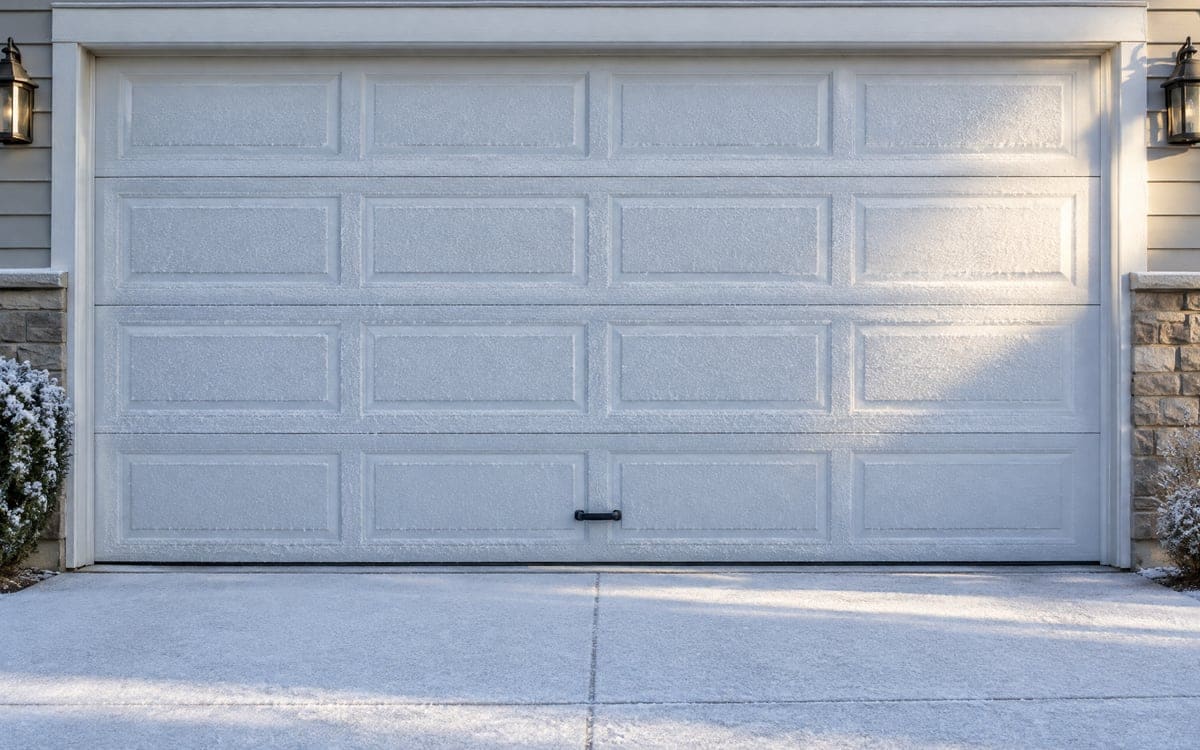
It can run past the middle of April
The normal last spring temperature of 32 degrees or lower at Chicago O'Hare comes on April 21, and the latest on Chicago record was May 25, 1992. Call that six months, give or take a week, where a sub-freezing morning is normal and not notable.
A door that was marginal in September will see hundreds of cold-start cycles across that window. Each morning you leave, each afternoon you come home, the system runs with the spring under load. The spring is doing the lifting; the opener is doing a smaller share than most people think.
Northern Illinois spends a lot of days at or below freezing
Northern Illinois averages 140 days a year at or below 32 degrees and 16 days at or below 0 degrees. More than a third of the year, the overnight low can hit freezing, and about 16 days a year sit at or below zero.
That is a lot of load cycles with the lubricant stiffened and the steel at its tightest. A spring near the end of its working life is more likely to let go on one of those mornings than on a mild day in July.
Cold does not snap a healthy spring on its own
A torsion spring, the long coil above the door on a shaft, holds its most tension with the door closed. Every time the door comes down and sits closed, the spring is wound to its maximum. When the opener starts to lift the door, the spring unwinds and does most of the work.
Cold steel is slightly less forgiving, and cold grease is slightly less helpful. Neither alone breaks a spring that has life left. What cold does is tip the balance on a spring whose coil has already stressed past the point where one more lift was always going to be the last one. A freezing morning is the moment the failure happens, rather than the reason the spring reached that moment.
Worn springs give out when the load peaks
The maximum load on the spring is at the start of the lift. The door is sitting on the floor, cold, and the opener asks the spring to begin raising it. If the spring is tired, that is the instant it pops. A loud bang from the garage, often described as a gunshot, is the sound of a torsion spring parting its coil.
The visible evidence is a gap in the coil above the closed door. On a working torsion spring the coils press up against each other tightly. On a broken one, there is a visible space, usually of an inch or two, where the spring parted.
The opener can hide a weak spring until it cannot
A healthy opener masks a weakening spring. The motor compensates for a few months of slow decline by working a little harder. On the morning the spring finally gives out, the opener often tries to lift anyway and runs with no door moving. That hum with the door not moving is a signature. On a chain or belt drive it sounds like the motor is straining. On a wall-mount it sounds like a quiet grind.
Running the opener against a broken spring is hard on the opener. If the door will not lift and the motor is running, stop using it until a technician can look. Leave the emergency release alone. On a door whose spring has failed, the door is now a dead weight on the cables and the opener trolley, not a counterbalanced load.
Signs a spring is near the end
A spring does not always give warning, but when it does, the warnings are visual and audible. The clues worth watching for are listed in the table below. None are a reason to lay a hand on the spring, which stays a technician's part under any circumstances.
| What you see or hear | What it often means |
|---|---|
| A new popping noise from above the door at each start | The spring is binding, usually from dry grease or a hairline crack |
| Faint rust blooming on the spring coils | Moisture has worked in, often from a wet winter and a damp garage |
| The door seems heavier when the opener lifts it | The spring is losing capacity |
| The opener struggles only on the first lift of a cold morning | Cold tipped a weakening system over |
| A gap of a quarter inch to several inches in the spring coil | The spring has parted; stop using the opener |
A creak or pop on the way up is often the first noise a homeowner notices on a spring that is beginning to bind.
A fall visit beats a January morning
Of the two ways to spend time on a broken spring, the better one is before it breaks. A technician's visit in September or October catches a tired spring while the car is parked in a working garage and the weather is still mild. A fall tune-up looks at the whole system: the cables, the rollers, the hinges, the opener's travel and the sensors.
The alternative is a January morning with the car behind a door that will not open and a technician schedule that already has snow calls on it. The repair bill is the same, but the day around it is harder on everyone.
Matched pairs and higher-cycle springs
A door with two torsion springs almost always has two springs of the same specification. When one goes, the other is near enough to the same mileage that replacing both at once is standard practice. The old spring on a door with a new mate will usually fail within a short stretch of the first replacement, and the homeowner is paying for two trips instead of one.
Higher-cycle springs are made from thicker wire or wound to a different formula to carry more lift-and-close cycles over their life. On a door that runs often, say three or more full open-and-close cycles a day across multiple drivers, a higher-cycle spring is worth asking about during spring replacement. On a door that opens twice a day, the standard-cycle spring is usually enough.
If it breaks on a frozen morning
The right actions are short. Keep people, pets and cars away from the door. If the car is inside, leave it inside and leave the opener off. Do not pull the emergency release. Do not lift or prop the door by hand. The spring, the cables and the opener trolley are the things that hold the door; with the spring gone, the only safe thing is to leave it where it is.
A broken spring often takes a cable with it, so a cable repair is a common part of the same visit. A spring that breaks with the car inside is the urgent version of this. Between visits, a monthly look at the door covers the homeowner routine, and winter and plow-season slush picks up the salt side of what winter does to the hardware.
January is where the pattern lives. Chicago's normal January mean temperature is 25.2 degrees F, and the coldest January in official records from 1873 to 2023 was January 1977 at 10.1 degrees. On the village's housing, where the median year built is 1976, a lot of the springs still running have seen fifty winters like that one.