Hoffman Estates garage door opener replacement

Installing a new garage door opener in Hoffman Estates

An opener can only lift a door that is balanced. On a garage door opener installation in Hoffman Estates, our technician checks the door's balance and springs first, because a new opener on a tired door wears out as fast as the one it replaced. The opener goes up after the door is sound.

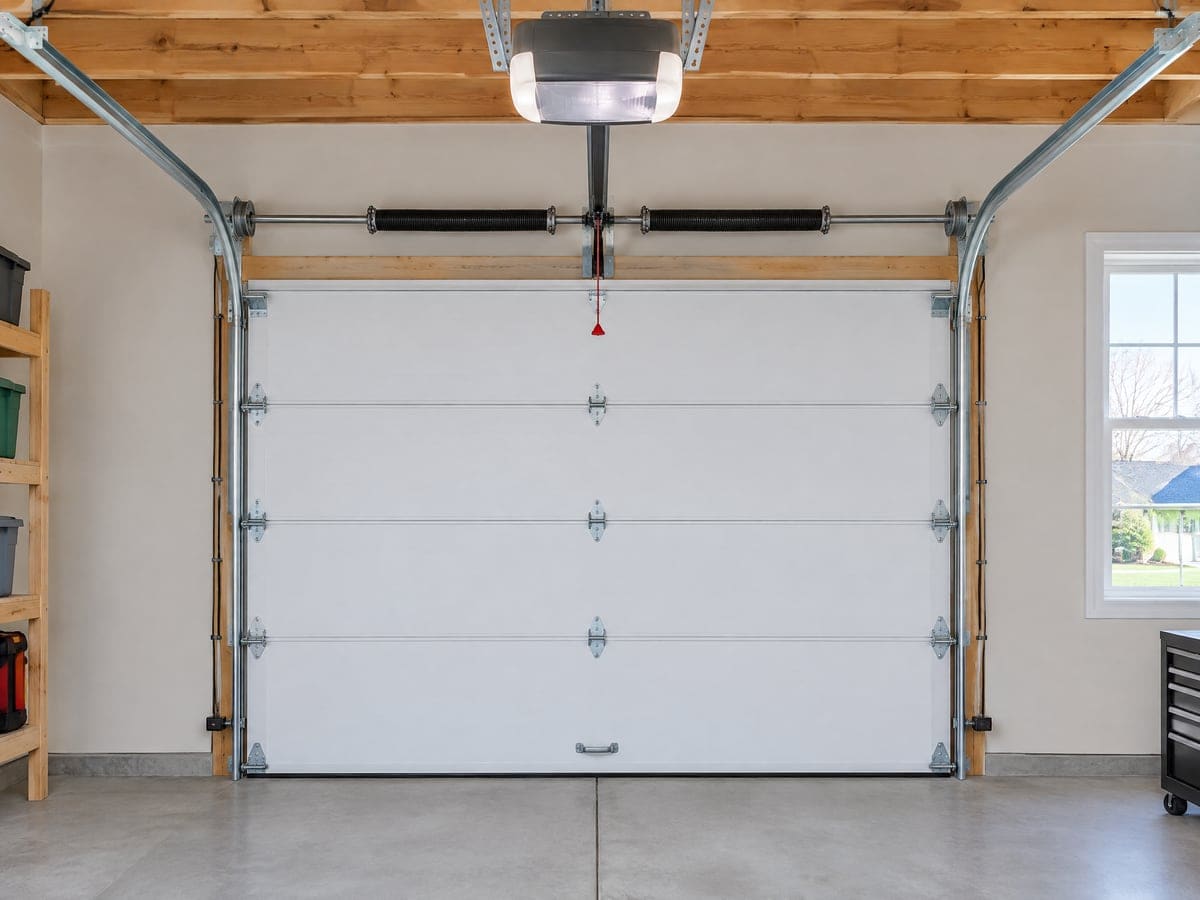
A new opener hung under the ceiling joists with its rail centered over a white door after a garage door opener installation.

Choosing the opener for your door
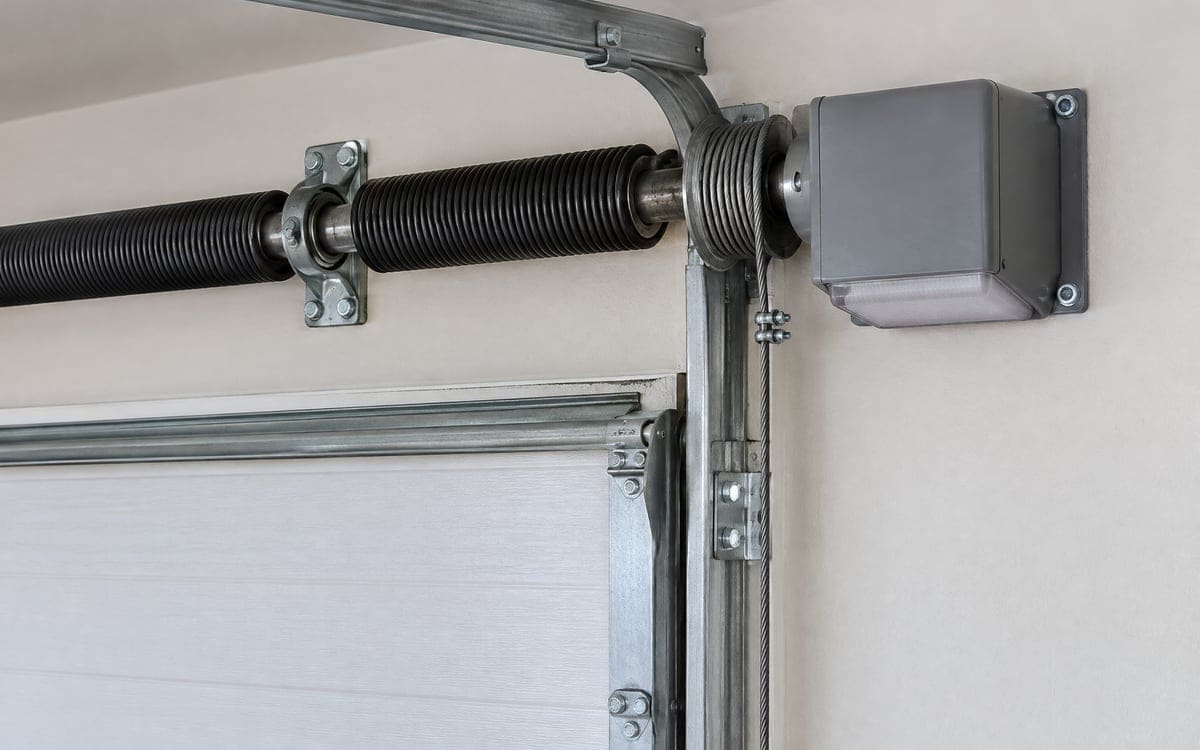
A wall-mount opener bolted beside the end of the torsion shaft, an option in garage door opener installation when the ceiling stays clear.

What an installation looks like depends on the door, the ceiling, the garage's wiring and how the household uses the opener. Our technician walks the install in this order, and you can watch the whole thing.

1. The balance and spring check on the door

Before the old opener comes down, the technician disconnects it and lifts the door by hand to check that it rides up smoothly and holds halfway. A door that will not hold balance needs its springs fixed first. Skipping the balance check is the most common reason a brand-new opener burns out early.

2. Taking down the old opener and rail

The old head comes off the hanging straps, the rail unbolts from the header bracket, and the sensor wiring is traced back and pulled. Dead wire still stapled to the joists gets removed too.

3. Header bracket and rail

The header bracket mounts to solid framing above the door, not to drywall. The rail bolts to that bracket and to a pair of hanging straps from the ceiling joists at the opener head end. Straight is more important than fast; a rail off-axis makes the opener work harder on every run.

4. Wall control and sensors wired

Two low-voltage wires run back along the ceiling and down one wall to the wall control. Another pair goes down the jamb to the two photo-eye sensors near the floor. We route the wire tidily, staple it clear of pinch points, and strip each end so the terminals catch bare copper. The photo-eye sensors get their own careful alignment at this step.

5. Travel and force set

The opener learns where up is and where down is through its own buttons. The technician runs the door full travel both ways, dials the close force so the door reverses on a mild obstruction, and sets the up and down limits so the door seats on the floor without the opener still pushing when it gets there.

6. The reversal test, with you watching

A length of two-by-four under the door is the standard test object. The door should come down, touch the wood and reverse without stalling or pausing. If it does not, the sensors, the limit or the force is wrong, and we fix it before leaving.

7. Remotes, keypad and car button

Each remote learns the opener through a learn button on the head. Keypads and the buttons built into car visors learn the same way. We pair the remotes and set the keypad code with you before we leave.

8. The outlet

Under the Village's electrical code amendments, when a home's electrical service is updated or its electrical system is altered, garage door openers must be provided with a receptacle within approved cord reach of the motor. Whether that trigger applies to your job is a question for Development Services.

A chain drive is sturdy and loud. A belt is quiet and about as sturdy. A screw drive uses a threaded steel rod and suits medium-weight doors. A wall-mount, sometimes called a jackshaft, sits beside the door on the spring shaft with no ceiling rail at all, which fits a garage with a cathedral ceiling or storage racks overhead. Battery backup keeps the opener running through a power cut. Rolling code remotes change the signal on every press, so a captured press cannot open your door tomorrow.

What you want What to look at
A quiet opener A belt drive, or a wall-mount with a smooth spring shaft
Low headroom in the garage A wall-mount at the end of the spring shaft
A heavy insulated door A one-horsepower-equivalent head with a strong rail
Power outages that still leave you needing in A head with battery backup, or an outlet-wired backup
Phone control and alerts A head with built-in Wi-Fi or a compatible bridge

Repair this opener or install a new one

When keeping the old opener makes sense

  • The opener has photo-eye sensors already, and parts for the model are still around
  • Only one part has failed, and the rest looks sound
  • The rail runs true and the sprocket is unworn

When a new opener earns its keep

  • The old head has no photo eyes
  • Parts for the model have gone off the market
  • The motor has been replaced once already, or the gear kit is on its second go
  • You want battery backup, phone control or a wall-mount, which the old head cannot do

At the door we take the light cover off, read the model and date code, listen to one run, and watch the sensors cycle. What goes into an opener price walks through what shapes the quote.

What our technicians bring to an opener install

Our vans usually carry openers in common sizes and drive types, rails that match them, header brackets, hanging straps, pairs of sensors with brackets, low-voltage wire, universal and model-specific remotes, and keypads. If you have asked for a wall-mount or a particular feature, we confirm the exact model before the visit.

On the call and the install visit

  1. You call and tell us what the opener is doing, or that you want a new one. We ask about the door, the ceiling and whether you want battery backup or phone control.
  2. The technician comes out, checks the door's balance, measures the headroom and the ceiling framing, and shows you the opener we would put in.
  3. You get the price for the opener, the install and any work the door needs first. The technician names the price and waits for your go-ahead.
  4. The install visit lifts out the old opener and rail, fits the new one, wires the sensors and the wall control, sets travel and force, runs the reversal test with a two-by-four, and hands you the paired remotes.

Calls may be recorded. A short notice plays before the call connects.

New openers in Hoffman Estates garages

About 63 percent of housing in the village was built before 1980. Headroom is one of the first things we check on a replacement: the amount of room between the open door and the ceiling drives whether the install goes with a standard rail head or a wall-mount beside the spring shaft.

The outlet detail matters when a garage circuit is being updated. The Village's electrical code amendment covered under step 8 above sets the receptacle rule; for a job-specific read on whether that trigger applies, Development Services at the Village is the one to ask.

For an opener install, the Illinois Home Repair and Remodeling Act leaves out home appliances, garage door openers among them, when the work is done by employees or agents of the merchant that sold the appliance or sold new products of the same type.

Garage door opener installation in Hoffman Estates: your questions

Belt or chain: which is quieter?

A belt is noticeably quieter, both at startup and through the run. In an attached garage with a bedroom above, a belt is the usual pick. Chains are still common on uninsulated detached garages where a bit of noise does not matter. Wall-mount openers skip the ceiling rail altogether and are often the quietest option.

Will a new opener fix a door that is hard to lift?

No. A heavy door is a spring problem, not an opener problem. Springs that need fixing first come before any new opener. A new opener on a door that is out of balance strains on every run and often fails within a season.

Do I need battery backup?

If you ever have to leave or arrive during a power outage without going through the house, battery backup is worth the price. On a garage with a side door and nothing locked away, it is a nicety. We lay out the choice at the visit.

Can I keep my old remotes?

Sometimes, with a universal remote adapter, and sometimes not. Older fixed-code remotes do not pair with rolling-code openers. On the install, we bring universal remotes that match the new opener and set them up with you, so you leave with working remotes either way.

What makes an opener installation longer?

A straight swap with the same wiring path is the short end of the range. New sensor runs, a wall-mount conversion, any door work that comes first, or a tight ceiling with awkward header framing all stretch the job. We walk through what applies at the visit before any price goes down.

What happens to the old opener?

We can take it off the ceiling and leave it with you to put at the curb on bulk pickup, or carry it out as scrap, whichever you prefer. Let us know on the call so the right space is in the van.

Does the outlet need to change in a Hoffman Estates garage?

The Village's receptacle rule, quoted in step 8 above, kicks in when the home's electrical service or system is altered. Whether that trigger applies to your job is a question for Development Services at the Village; an electrician handles the outlet work and we handle the opener.

If you are weighing a new opener, keep using the one you have until the visit so our technician can watch it run. The monthly check is the between-visit routine for a new opener, and the case for a bigger head on an insulated door is on the blog. If a new door is also on the list, a combined new door and opener is often cleaner than two visits. Call (847) 744-8615 and tell us the age of the door, the ceiling in your garage, and whether you want battery backup, phone control or a wall-mount. You can also leave your number in the form below and we will call you back.

Door stuck, loud or lopsided?

Describe the door, and you talk with someone who works on garage doors.

Call (847) 744-8615

Calls may be recorded. A short notice plays before the call connects.

Browse all services

Rather we call you?

Leave your name and number and we will call you back.

We use your number only to call you back. Privacy policy