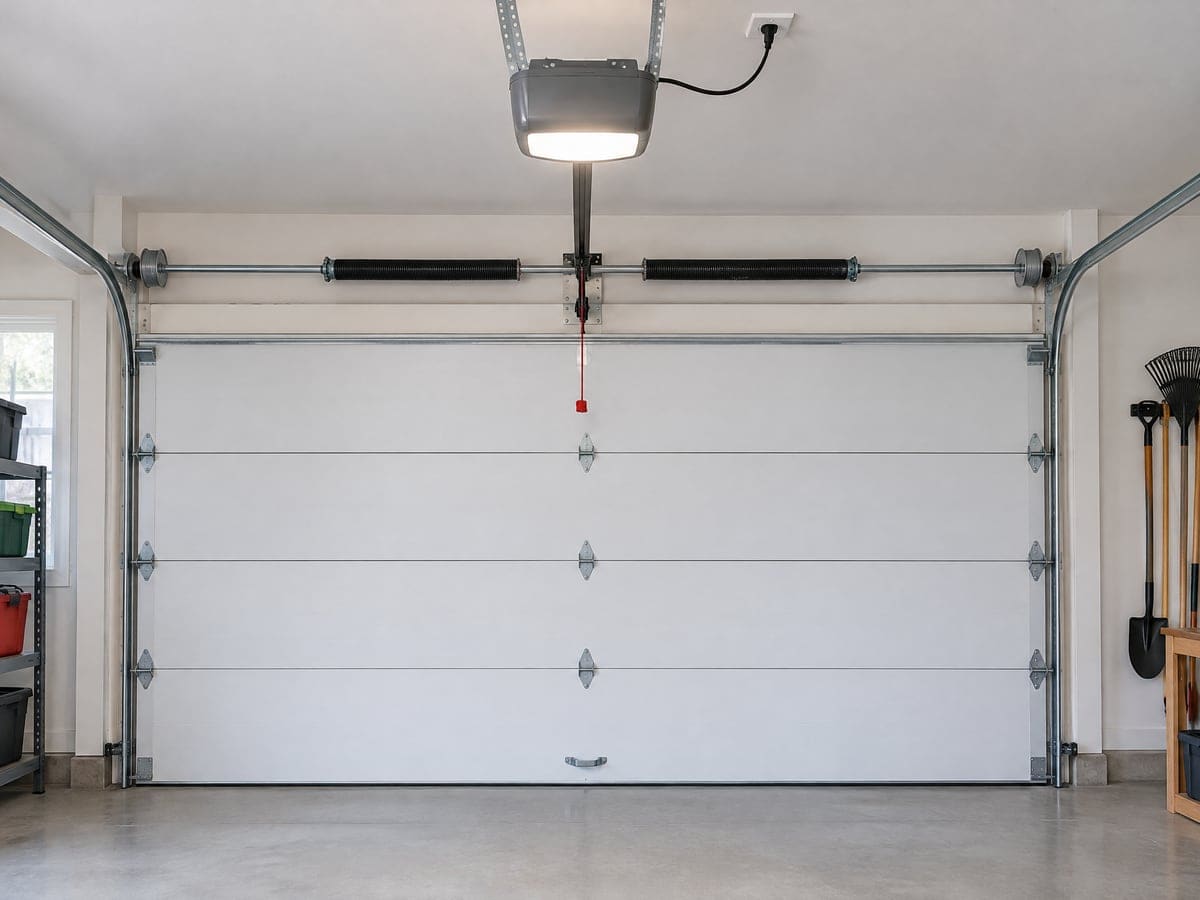
What is the opener doing?
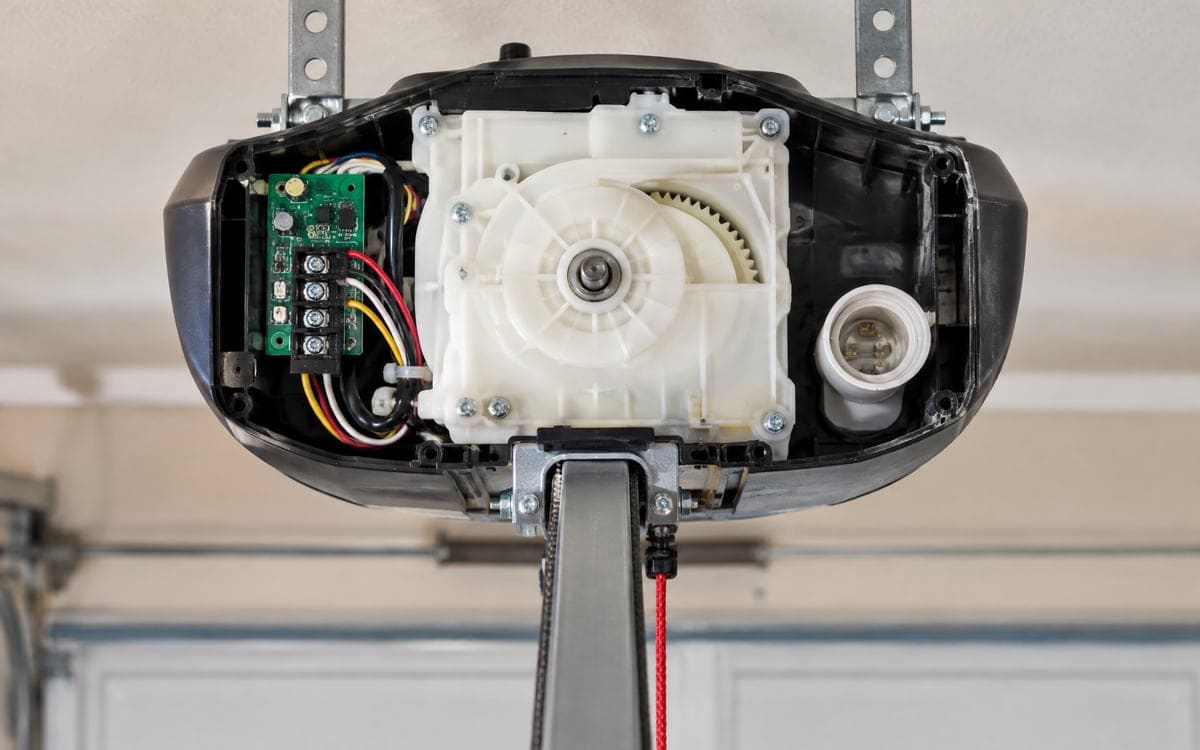
An opener does one small thing, pull a chain or a belt or spin a jackshaft, and the door does the rest. When something goes wrong, we start at the outlet and work along the system until we find where the signal or the force stops.
1. Power at the outlet and the breaker
The ceiling light on the opener head is the easiest tell. If it is dark, we test the outlet and flip the breaker in the panel. A tripped breaker on the garage circuit sometimes points to a short in the opener itself.
2. The lock switch on the wall control
When lock mode is on, the opener ignores remotes and the keypad, but the wall button still works. If the wall button runs the door and nothing else does, lock mode is the first thing to rule out. We press it once to release and try the remote again.
3. The photo-eye sensors near the floor
The two small sensors a few inches above the slab tell the opener there is nothing in the door's path. A blocked beam, a bent bracket or a leaf is enough to stop a close. We check the indicator lights on both housings, straighten brackets, and wipe the lenses. A deeper look at the wiring belongs on the photo-eye sensor page.
4. Remote and keypad against the wall button
If the wall button works but the remote does not, the problem lives in the remote, its battery, the opener's radio or the lock switch. We swap the battery and try again. Keypads sit on the same radio and get the same treatment.
5. The motor runs, the door does not move
A motor that spins while the door sits still means the trolley has come loose from the chain or belt carriage, the main drive gear has worn its teeth off, or on a jackshaft opener the drive coupling has stripped. The technician takes the light cover off and watches the head run to confirm. We leave the emergency release cord alone and handle the reconnect with the door supported.
6. The door starts, then reverses before closing
A door that heads down and backs up usually has one of three causes: a sensor sees something the eye does not, the close force is set too sensitive, or the down limit is set too far and the door hits the floor with weight to spare. We watch a run, read the force setting, and move the limit a touch at a time.
7. The door closes only while the button is held
Hold-to-close is built into every opener made after sensors became standard. When the opener cannot see the sensors, it will not run a close on its own; the wall button closes it in a slow trickle only while the button is pressed. The fix is sensors, wiring or the opener's low-voltage terminals, in that order.
8. The opener hums or clicks and the door does not move
This one is almost always the door. A broken torsion spring leaves the whole weight on the opener, which cannot lift it. The opener strains, hums for a second, and gives up. A click without any motor sound points to the control board or the limit switches. A broken spring that makes the opener strain is a technician's job.
| Symptom | Likely cause | What it usually needs |
|---|---|---|
| Nothing at all, no light on the head | No power at the outlet or breaker | Outlet or panel work, sometimes a dead opener |
| Wall button works, remote does not | Lock mode on, or a dead remote battery | Release lock, swap batteries, re-program if needed |
| Door closes only with the button held | Photo-eye fault or wiring break | Sensor realignment or wiring |
| Door reverses partway through a close | Sensors blocked or out of alignment, or close force too twitchy | Sensors cleaned, close force dialed back |
| Door reverses the moment it touches the floor | Down limit set too far, or close force too twitchy | Down limit moved, close force dialed back |
| Motor runs, door stays put | Stripped drive gear or loose trolley | New gear kit, trolley re-engaged |
| Hum, no movement | Broken torsion spring under load | Spring replacement first; the opener is usually fine |
| Opener screams the whole way | Dry rail, worn sprocket, stretched chain or belt | Lubricate, replace parts, or try the noisy door page |
Fix this opener or put in a new one
A few openers earn a repair every time. Others reach a point where swapping parts starts costing more than a new head.
When a repair makes sense
- The opener is from the sensor era (two photo eyes near the floor), with parts still available for its model
- One component failed, the rest looks sound and the rail runs true
- The gear kit, the logic board or the sensors are what need replacing
- The remotes have gone missing or the keypad is dead
When a new opener earns its keep
- The unit has no safety sensors at all, which marks it as very old
- Parts for the model have dried up
- The motor is on its second repair in a short span
- The chain or belt has stretched and the sprocket is worn, and the gear kit shows chewing
At the opener head we check the model and date code, the sensor terminals and the rail wear, and listen to one full run. A unit three or four repairs in is almost always better off replaced. What goes into an opener price covers how a quote is put together.
What our technicians bring on an opener call
Our vans usually carry drive gears and sprockets for the most-used openers, logic boards for common units, pairs of photo-eye sensors with brackets and low-voltage wire, universal remotes and keypads, and a trolley or two. Older openers sometimes need a part on order, and we tell you that up front.