Checks in order
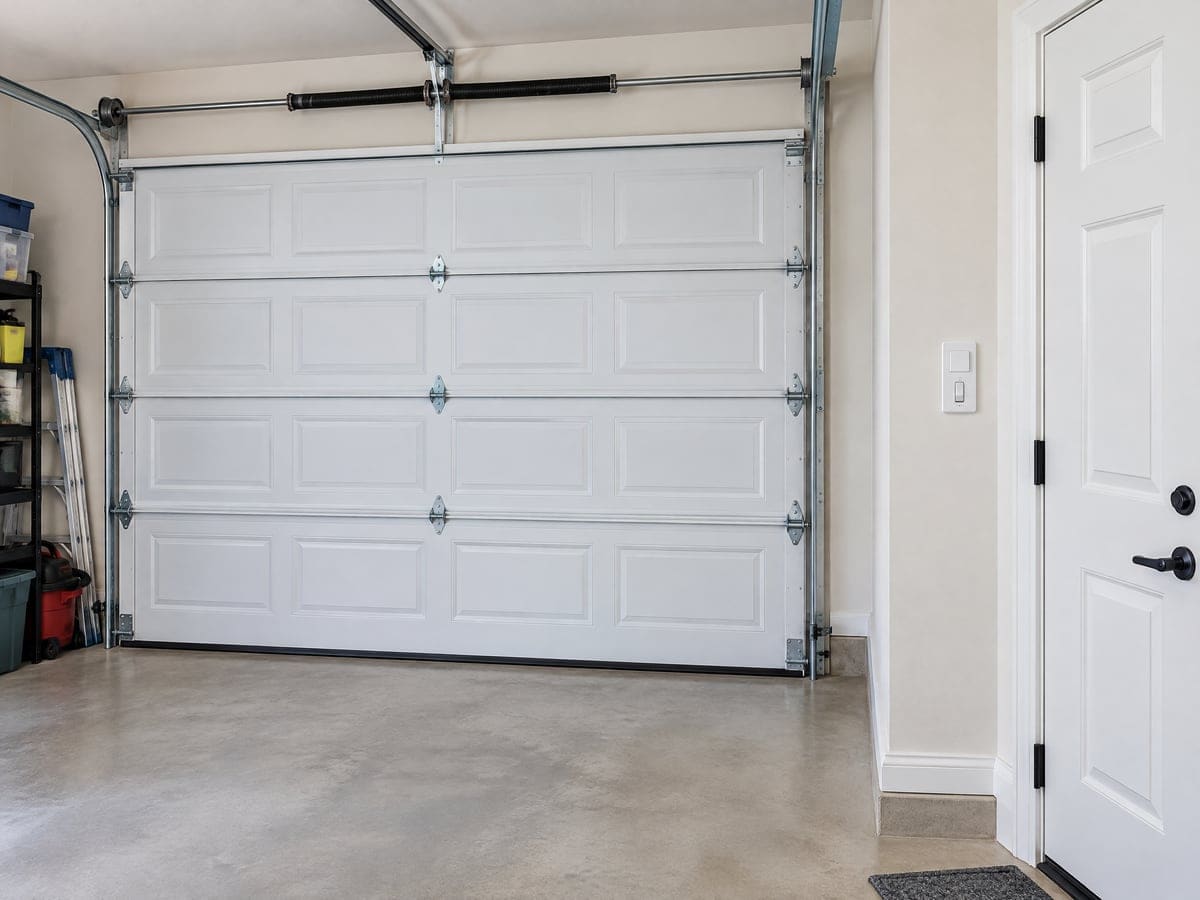
Go through these one at a time, from the house into the garage. Each is a visual check or a wall-button press; nothing asks you to touch a spring, a cable, the emergency release or the door itself.
1. Power at the opener, the outlet and the breaker
Look up at the opener head. Is the ceiling light lit, even dimly? If it is dark, check the breaker that feeds the garage circuit. If the breaker is on and the light is still dark, the outlet or the opener itself may be dead.
2. The lock switch on the wall control
Wall controls have a small lock button. When lock mode is on, the opener ignores remotes and the keypad, but the wall button still works. If the wall button runs the door and the remote does nothing, press the lock button once to release it, then try the remote again.
3. The sensor lights near the floor
From where you stand, look at the two small sensors a few inches above the slab on each side of the opening. Each has an indicator light. Both should be on and steady. A sensor that is dark or blinking is misaligned, blocked or dirty. Look for anything in the beam, a leaf, a shovel against the wall, afternoon sun on the lens, or a patch of snow in the housing. Wipe a lens only with the door fully closed or fully open and still; never reach into the opening while the door is stopped partway.
4. The remote battery against the wall button
If the wall button works and the remote does not, swap the remote's coin cell. If the wall button is also failing, the wall control itself or its low-voltage wire is the problem; that is a visit.
5. The opener runs but the door stays put
If the motor spins and the ceiling light flashes but the door does not move, the trolley has probably come loose or the drive gear has stripped. Do not pull the red emergency release cord; on a door with a broken spring, that cord drops the door's weight onto whatever is still holding it. The technician reconnects the trolley or replaces the gear kit with the door supported.
6. The door reverses partway down
A door that heads down and comes back up before touching the floor usually means the two photo eyes see something in the beam or the opener's close force is set too sensitive. The first is a sensor check; the second is an opener adjustment. A door that reverses as it touches the floor is a different fault, usually a down limit set too far or a close force set too sensitive.
7. The door closes only while the button is held
Hold-to-close is built into every opener that uses photo-eye sensors. When the opener cannot trust the sensors, it will not run a close on its own; the wall button closes the door in a trickle only while held. The fix is on the sensors, their wiring or the opener's low-voltage terminals. Sensor alignment and wiring covers it.
8. The door looks heavy, crooked or a cable hangs loose
Stop. Do not press the button again. A door that lifts a few inches and stops, or sits lopsided with one side lower, usually has a broken torsion spring or a snapped lift cable. Pulling the emergency release at this point drops the door's weight, which is why we do that on the visit with the door supported. A spring that has snapped and a broken lift cable are both technician work.
9. The bottom seal is frozen to the slab
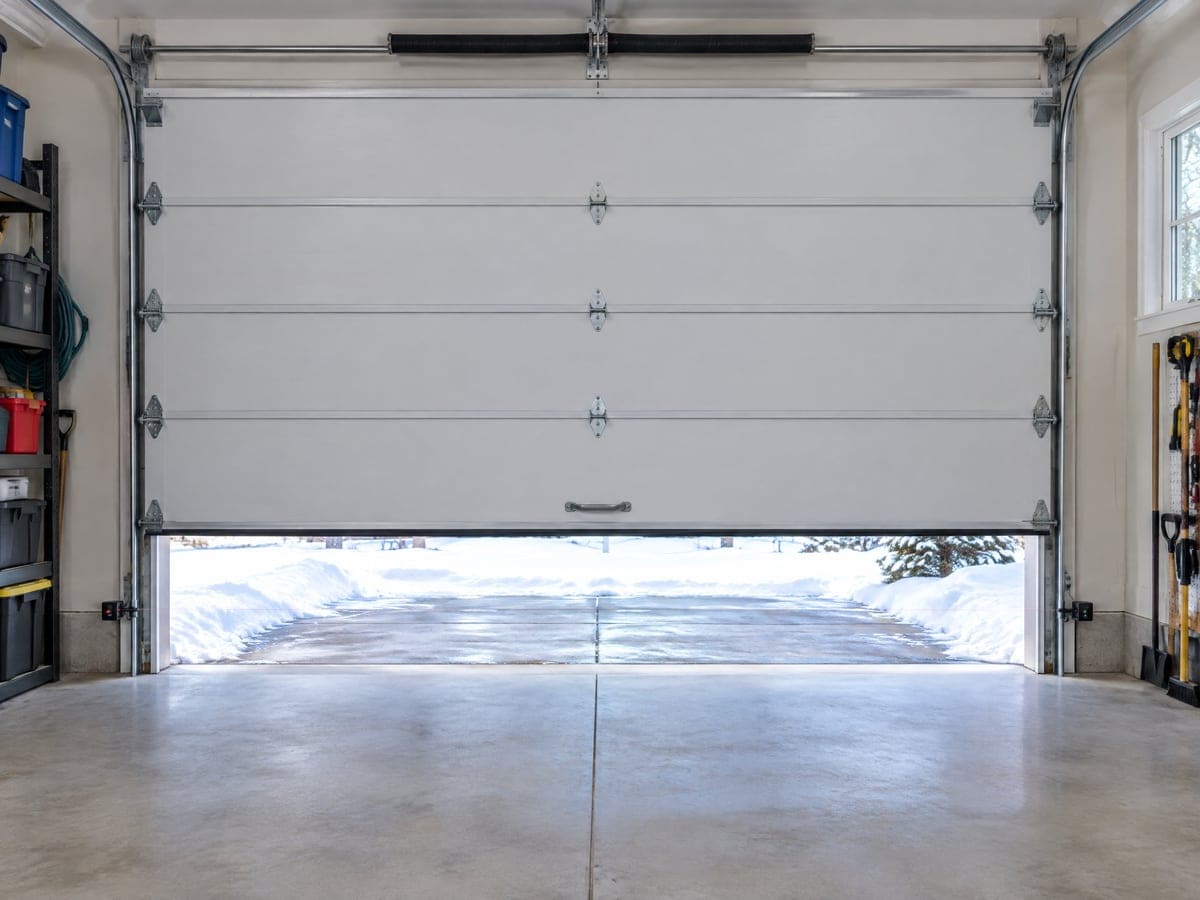
On a cold morning, the bottom seal can bond to the concrete overnight. The opener feels this as a stuck door and pulls hard, which often creases a section or jumps a roller. Leave the opener alone and call. Do not pour hot water on the seal, do not pry it with a shovel, and do not try to break it free with the opener. A bottom seal frozen to the floor is covered on the seal page.
| Symptom | Likely cause | What it usually needs |
|---|---|---|
| Nothing at all, no opener light | Dead outlet or tripped breaker | Breaker reset, outlet work, or opener repair |
| Wall button works, remote does not | Lock mode or dead remote battery | Release lock, swap battery |
| Door closes only while held | Photo-eye fault or wiring | Sensor realignment or wiring |
| Door reverses partway down | Blocked or misaligned sensors, or close force too sensitive | Sensors cleaned, close force reset |
| Door reverses as it touches the floor | Down limit set too far or close force too sensitive | Limit and force adjusted |
| Motor runs, door stays | Trolley off the chain, or stripped drive gear | Reconnect, or new gear kit |
| Door lifts a few inches and stops | Broken torsion spring under load | Spring replacement |
| One side low, slack cable | A snapped lift cable or a dropped side | Cable work, spring check |
| Door hanging crooked, rollers out at the top | Door off its track | Off-track reset |
| Bottom seal stuck to the slab | Frozen overnight | Technician releases, seal checked |
Quick fixes or a bigger job
Many will-not-move calls end with a small fix. The rest need parts.
When a quick fix handles it
- Lock mode on, a dead battery, a blocked sensor beam
- A tripped breaker from a space heater on the same circuit
- A misaligned sensor that straightens with a bracket tweak
When bigger work is called
- A broken spring or cable
- A door off its track or a creased section
- A stripped drive gear or a dead opener
- Sensors whose brackets or wiring are shot
- A bottom seal that keeps bonding to a sunken slab
How we tell at the door: we run through the same checks, in the same order, with the door supported wherever the check could put weight on something. If the trouble is at the opener, we price opener work. If it is at the door, opener repair is a side note and the door comes first.
What our technicians bring on a will-not-move call
Our vans usually carry photo-eye sensors with brackets, low-voltage wire, gear kits for common openers, trolleys, remotes and keypads, springs in common sizes, lift cables, drums, bottom seals and the winding bars and ratchet straps for working on a loaded door.